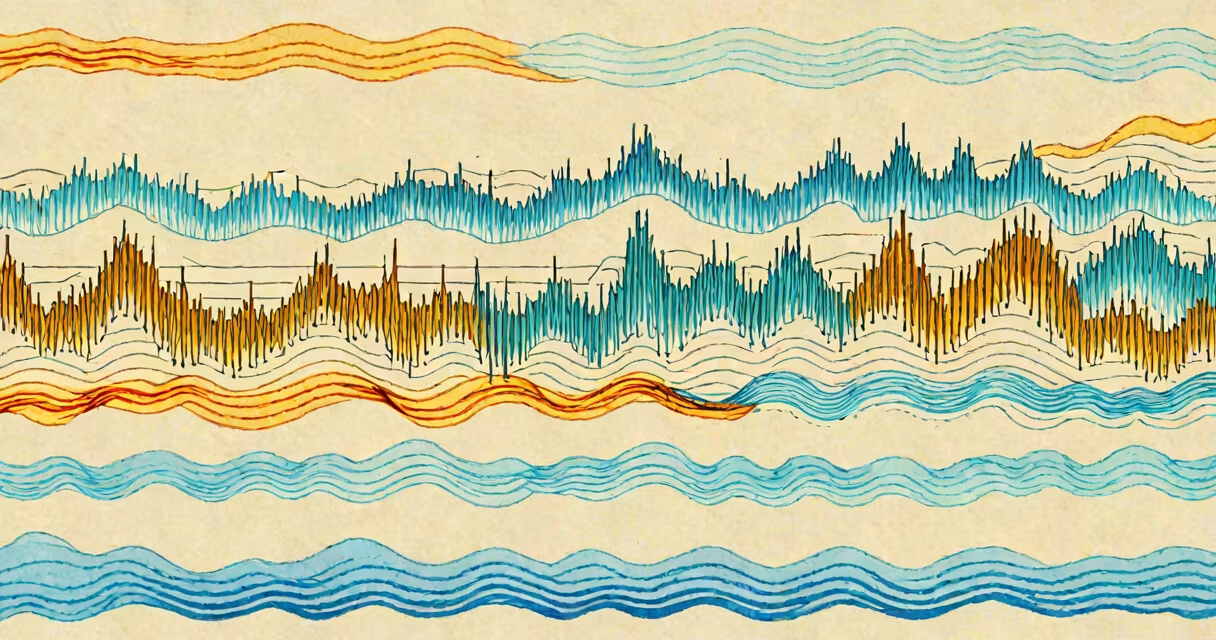
The symbol for frequency is Hz, which stands for hertz and represents cycles per second. This unit measures how many times something repeats in one second, from sound waves to radio signals.
Frequency describes the rate of repetition. For example, a 100 Hz sound wave vibrates 100 times per second. Higher frequencies mean faster repetitions, while lower frequencies mean slower ones. The hertz unit was named after Heinrich Hertz, who proved the existence of electromagnetic waves.
Frequencies appear in different forms:
People often confuse frequency with amplitude. Amplitude measures the size of the wave, while frequency measures how often it repeats. For example, a loud sound (high amplitude) at 100 Hz still vibrates 100 times per second, even if it's quieter.
Another mistake is assuming higher frequencies always mean better quality. In audio, very high frequencies can sound harsh, while in radio, higher frequencies may not travel as far due to atmospheric absorption.
Radio stations use specific frequencies to broadcast signals. A station at 98.5 MHz (megahertz) transmits 98,500,000 cycles per second. Tuning your radio to this frequency aligns your receiver with the station's signal, allowing you to listen to the broadcast.
I once tested this by tuning a radio to different stations. Lower frequencies like 880 kHz carried further at night, while higher frequencies like 107.9 MHz worked best during the day. This demonstrated how frequency affects signal travel.