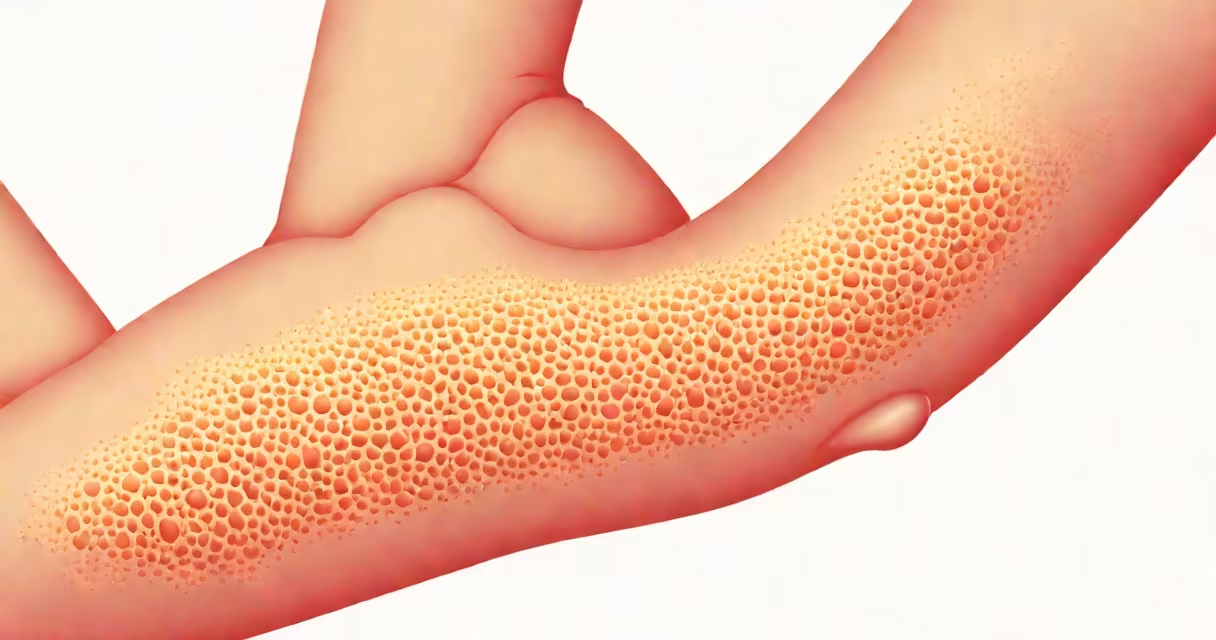
Hives are raised, red welts on the skin that appear suddenly and cause intense itching. They're usually an allergic reaction to food, medication, or environmental triggers.
Hives form when the body releases histamine, a chemical that causes blood vessels to leak fluid into surrounding tissues. This creates the characteristic raised, itchy welts. The welts can appear anywhere on the body and vary in size from small spots to large patches.
Hives are classified based on duration and cause:
| Type | Duration | Common Triggers |
|---|---|---|
| Acute hives | Less than six weeks | Food allergies, medications, insect stings |
| Chronic hives | More than six weeks | Autoimmune conditions, infections, stress |
| Physical hives | Minutes to hours | Pressure, heat, cold, sunlight, vibration |
The most common symptom is itching, but hives can also cause:
In severe cases, hives can lead to swelling in the throat, making breathing difficult-a condition known as angioedema.
Most hives are harmless and go away on their own. However, seek medical attention if:
Over-the-counter antihistamines like cetirizine or loratadine can help reduce itching and swelling. For chronic hives, doctors may prescribe stronger medications. Avoid scratching the welts, as this can worsen irritation and lead to infection.
I once had hives after eating shellfish. The welts appeared within minutes and were incredibly itchy. Taking an antihistamine helped clear them up within a day. Since then, I've avoided shellfish to prevent recurrence.
While not all cases can be prevented, avoiding known allergens and triggers can help. Common triggers include certain foods, medications, insect stings, and stress. Keeping a diary of when hives appear can help identify patterns and avoid future outbreaks.