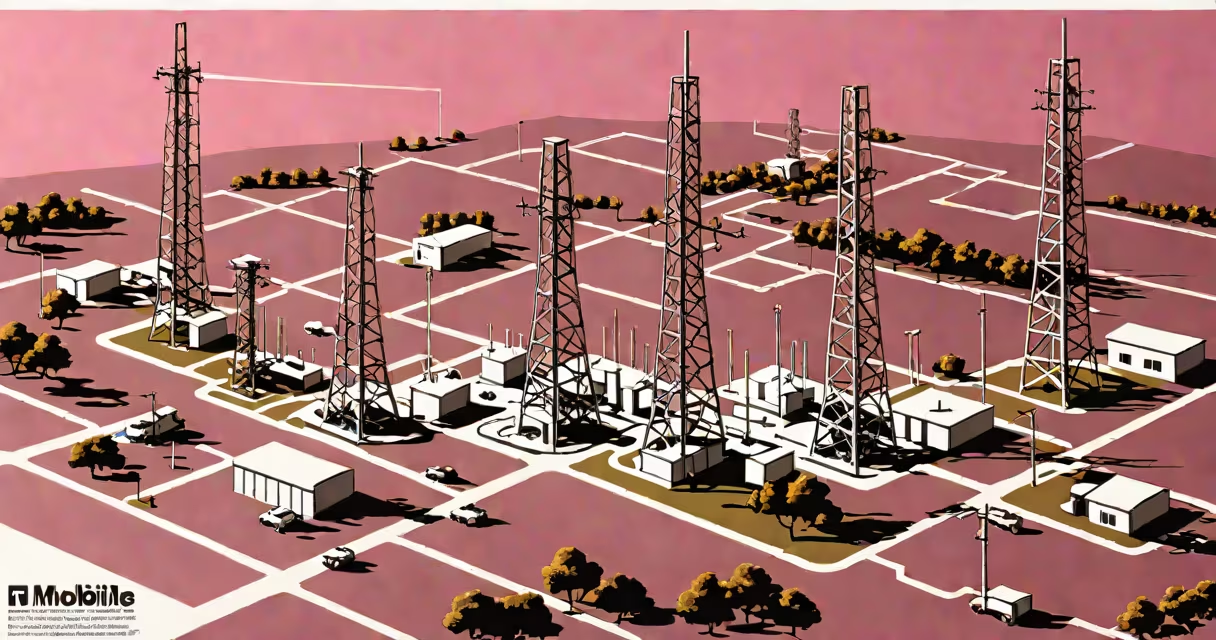
T-Mobile Highway 64 is a wireless network expansion project using 600 MHz spectrum to improve rural coverage. The initiative focuses on deploying new cell sites in underserved areas to provide better connectivity.
The project leverages the 600 MHz spectrum, which travels farther and penetrates buildings more effectively than higher-frequency signals. This makes it ideal for covering large rural areas with fewer towers. T-Mobile has been building new cell sites along highways and in rural communities to extend its network reach.
T-Mobile Highway 64 involves several types of infrastructure:
The initiative targets rural areas that have historically had limited access to high-speed wireless services. By improving coverage along highways and in remote communities, T-Mobile aims to bridge the digital divide and provide reliable connectivity for residents, businesses, and first responders.
One common misconception is that T-Mobile Highway 64 is solely about increasing speed. While it does improve speeds, the primary goal is to extend coverage to areas that previously had little or no service. Another misunderstanding is that the project is limited to highways. In reality, it includes both highway corridors and nearby rural communities.
Unlike higher-frequency spectra, such as 2.5 GHz or millimeter wave, the 600 MHz spectrum used in T-Mobile Highway 64 can cover up to 10 times the area of a typical cell site. This makes it far more efficient for covering large, sparsely populated regions.
According to T-Mobile, the project has already added thousands of new cell sites across the United States, with plans to continue expanding coverage in the coming years. This initiative is a key part of T-Mobile's broader strategy to provide nationwide coverage and close the rural-urban connectivity gap.