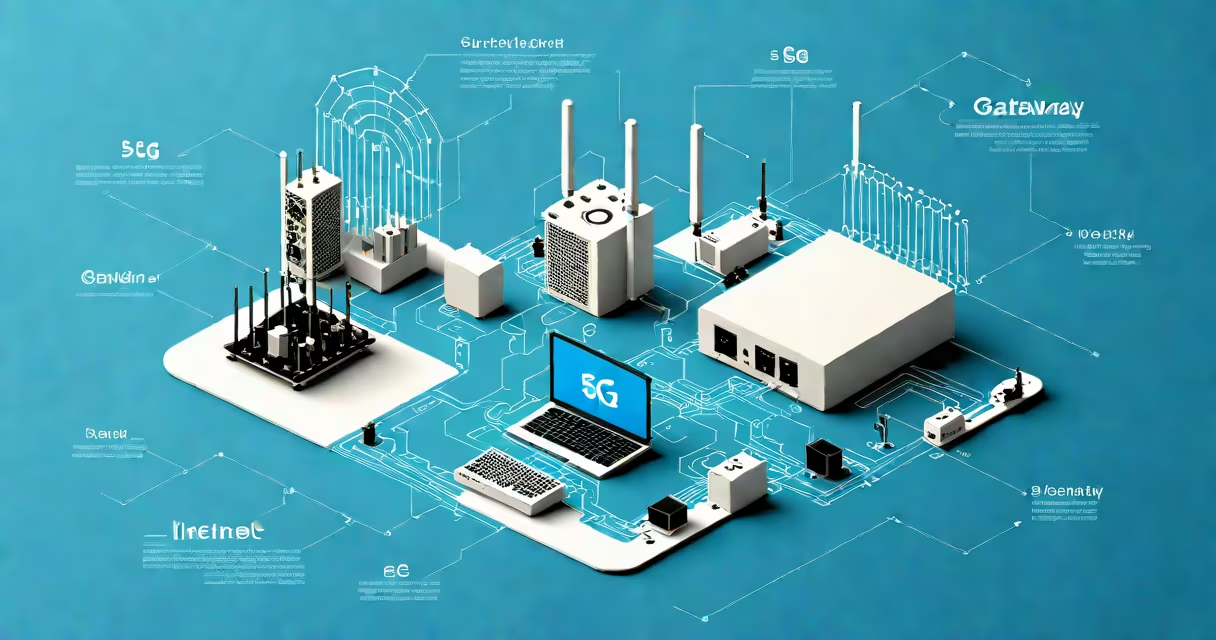
A the internet 5g gateway is a networking device that connects your home or office to a 5G cellular network, providing high-speed internet access without wired connections. These gateways replace traditional cable or DSL modems by using 5G wireless signals.
Unlike standard routers that connect to fiber or cable lines, a 5G gateway communicates directly with nearby 5G cell towers. It converts wireless 5G signals into a local Wi-Fi or Ethernet network, allowing all your devices to access the internet. Most models include multiple antennas to improve signal strength and reduce interference.
Modern 5G gateways typically include:
| Type | Best For | Typical Speed |
|---|---|---|
| Consumer-grade | Home use | 300-1,000 Mbps |
| Business-grade | Small offices | 500-2,000 Mbps |
| Mobile hotspots | Travel or remote work | 100-500 Mbps |
Most consumer models support speeds of 300-1,000 Mbps, sufficient for streaming 4K video or video conferencing. Business models often include additional security features and support more connected devices.
Many people confuse 5G gateways with standard Wi-Fi routers. While both create local networks, only 5G gateways connect directly to cellular networks. Traditional routers require a separate modem connected to wired internet services.
Another misconception is that 5G gateways only work with specific carriers. Most modern gateways support multiple carriers through software updates, though some older models may have carrier-specific firmware.
For optimal performance, place your 5G gateway near an exterior wall facing the nearest cell tower. Some models allow you to attach external antennas for better signal strength in areas with weak coverage.
When selecting a 5G gateway, consider:
For the fastest speeds, look for gateways supporting both sub-6 GHz and mmWave 5G bands. The latest models often include advanced features like mesh networking for larger homes.