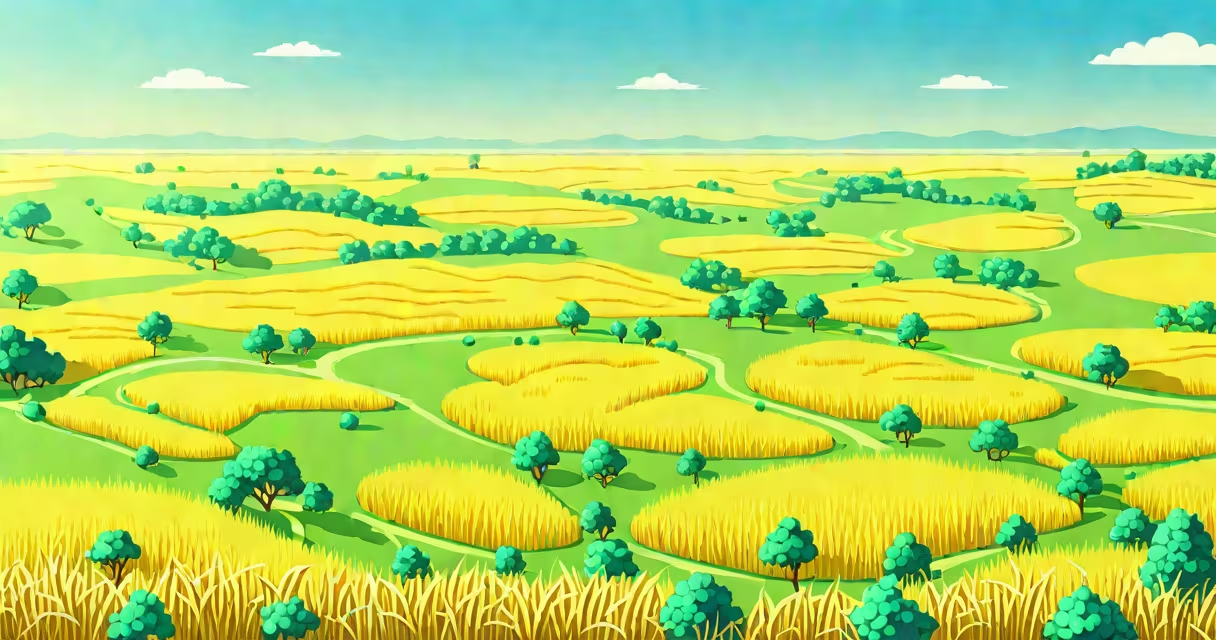
A temperate grassland biome is a large, relatively flat area with grasses and few trees, located in mid-latitude regions with moderate rainfall and distinct seasons. These ecosystems cover about 25% of Earth's land surface and support diverse wildlife and human agriculture.
Temperate grasslands form in areas with 20-35 inches of annual rainfall, too dry for forests but moist enough to sustain grasses. The soil is rich in nutrients due to decaying plant matter, making it ideal for farming. Grasses dominate because they grow deep roots to access water and nutrients, while shallow-rooted plants struggle.
Temperate grasslands go by different names depending on the region:
| Region | Name | Examples |
|---|---|---|
| North America | Prairies | Great Plains |
| South America | Pampas | Argentina, Uruguay |
| Europe and Asia | Steppes | Russia, Kazakhstan |
| Africa | Veldts | South Africa |
Each type shares similar characteristics but differs in climate and species diversity.
Temperate grasslands are important for agriculture, supporting crops like wheat, corn, and soybeans. The fertile soil and moderate climate make them ideal for farming. They also provide habitats for animals such as bison, antelopes, and burrowing owls. Human activities like ranching and crop cultivation have altered these landscapes.
Many confuse temperate grasslands with tropical savannas, which have scattered trees and higher rainfall. Unlike savannas, temperate grasslands lack trees due to colder winters and less moisture. Another mistake is assuming all grasslands are deserts; temperate grasslands receive enough rain to support grasses but not trees.
I visited the Great Plains in Kansas and saw firsthand how vast and seemingly endless the grasslands are. The horizon stretched for miles, broken only by occasional farmhouses. The soil was dark and rich, perfect for growing wheat. It was clear why this region is a breadbasket for the world.
The temperate grassland biome plays a important role in global agriculture and biodiversity. Its unique climate and soil support diverse life forms and human activities. Understanding its characteristics helps in preserving these ecosystems for future generations.