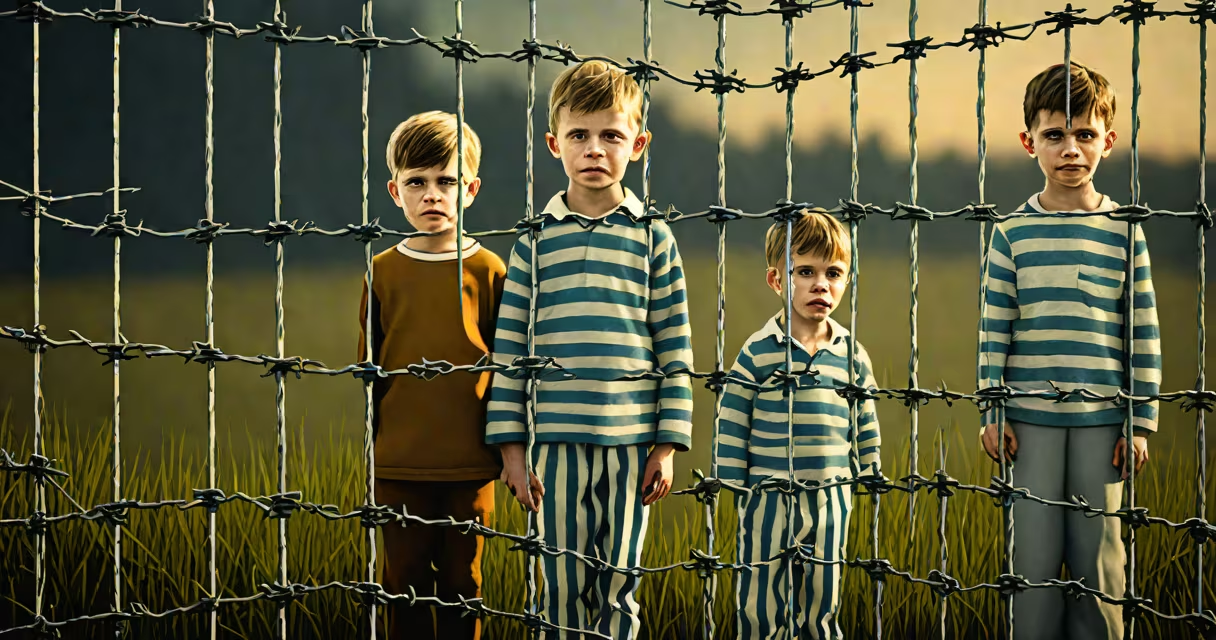
The Boy With the Striped Pyjamas is a 2006 historical fiction novel by Irish author John Boyne. It tells the story of Bruno, a nine-year-old German boy whose father becomes the commandant of a Nazi concentration camp during World War II.
Bruno moves with his family to "Out-With" (Auschwitz), where he befriends Shmuel, a Jewish boy imprisoned in the camp. Through their innocent friendship, the novel explores themes of innocence, humanity, and the horrors of the Holocaust.
The story revolves around two primary characters:
The setting is primarily Auschwitz during World War II, although the name is changed to "Out-With" in the novel to reflect Bruno's limited understanding.
The novel is widely used in schools to teach about the Holocaust and the consequences of prejudice and hatred. Its simple language and narrative style make it accessible to younger readers, while its profound themes resonate with older audiences.
According to the United States Holocaust Memorial Museum, the book has been a valuable resource for educators seeking to introduce the subject of the Holocaust to students in a manner that is both age-appropriate and impactful.
Some readers mistake the novel for a true story due to its realistic portrayal of events. However, it is a work of fiction. The character of Bruno and his family are fictional, although the setting and historical context are based on real events.
Another misconception is that the novel trivializes the Holocaust. On the contrary, it serves as a useful reminder of the atrocities committed and the importance of remembering history to prevent its repetition.
When I first read The Boy With the Striped Pyjamas, I was struck by the simplicity and innocence of Bruno's perspective. The contrast between his childhood curiosity and the grim reality of the concentration camp creates a deeply moving narrative. The ending, in particular, is heartbreaking and leaves a lasting impact on the reader.