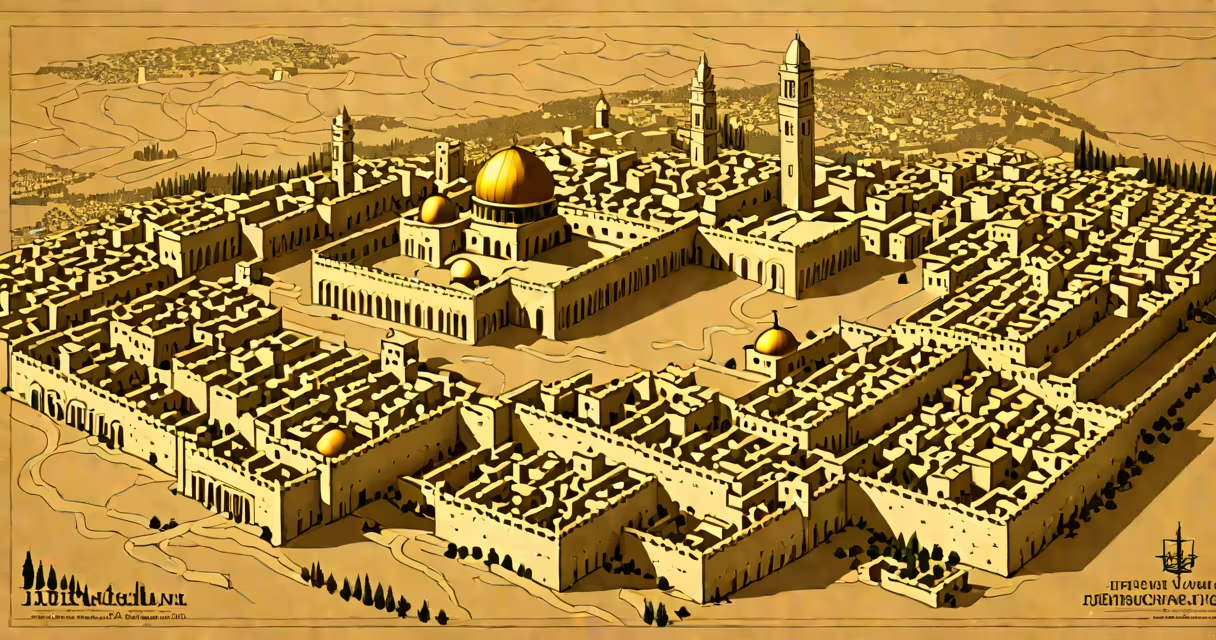
"The Lord is there" translates the Hebrew name Yahweh Shammah, meaning "the Lord is present." This phrase appears in Ezekiel 48:35 as the final name for Jerusalem, emphasizing God's dwelling place among His people.
Yahweh Shammah combines two elements:
The name declares God's physical presence in Jerusalem, particularly at the Temple. Unlike other divine names that emphasize God's nature (like El Shaddai, "God Almighty"), Yahweh Shammah focuses on His location.
| Name | Meaning | Scripture Reference |
|---|---|---|
| Yahweh Shammah | The Lord is there | Ezekiel 48:35 |
| Shekinah | Dwelling, settling | Exodus 40:34-35 |
| Kabod | Glory, weightiness | Exodus 16:10 |
Yahweh Shammah appears only once in Ezekiel's vision of the restored temple. This prophet spoke during the Babylonian exile (6th century BCE), when Jerusalem lay in ruins. The name offered hope that God would return to His people and His city.
Jerusalem's Temple Mount served as the geographic center of worship. The name Yahweh Shammah reinforced this centrality, declaring that God's presence wasn't dispersed but concentrated in one holy place.
Many confuse Yahweh Shammah with Shekinah, another term for divine presence. While both describe God's dwelling, Shekinah emphasizes the visible manifestation of God's glory (like the cloud in Exodus 40:34-35), whereas Yahweh Shammah stresses location.
Another mistake is assuming Yahweh Shammah refers to God's omnipresence. The name specifically locates God in Jerusalem, contrasting with later Jewish concepts of God's universal presence.
When I visited Jerusalem's Temple Mount, I stood where Yahweh Shammah was fulfilled. The Dome of the Rock now occupies the site of Solomon's Temple, where God's presence once dwelt visibly. Archaeologists have uncovered remnants of earlier Jewish temples beneath the current structures, confirming the historical reality behind this biblical name.
Ezekiel's vision (chapters 40-48) describes a future temple where "the Lord is there." This name reassured exiled Jews that God hadn't abandoned them permanently. It remains a useful reminder of God's faithfulness to His promises.
For more on divine presence in Hebrew, see how to abide in Hebrew.