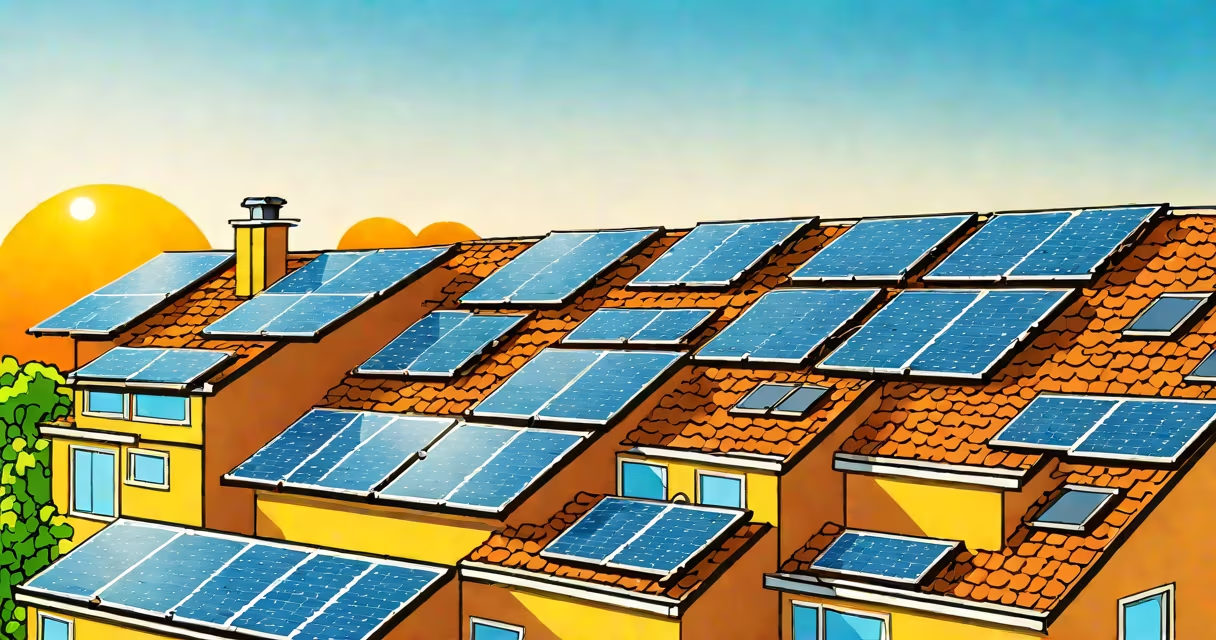
The definition of solar refers to technologies that convert sunlight into usable energy, primarily electricity or heat. This process harnesses the sun's rays using photovoltaic cells, concentrated solar power systems, or other methods.
Solar energy begins with sunlight, which contains photons. When these photons hit photovoltaic cells in solar panels, they knock electrons loose from their atoms. This creates an electric current that can be captured and used as electricity. In concentrated solar power (CSP) systems, mirrors reflect sunlight onto a receiver, heating a fluid that produces steam to drive turbines.
For example, a typical residential solar panel system includes multiple panels installed on a roof. These panels contain silicon-based photovoltaic cells that generate direct current (DC) electricity. An inverter then converts this DC electricity into alternating current (AC) electricity, which powers homes and businesses.
| Type | Description | Common Use |
|---|---|---|
| Photovoltaic (PV) Solar Cells | Convert sunlight directly into electricity using semiconducting materials. | Residential and commercial rooftops, solar farms. |
| Concentrated Solar Power (CSP) | Uses mirrors to concentrate sunlight and produce heat, which drives a turbine. | Large-scale power plants. |
| Solar Thermal | Uses sunlight to heat water or air for direct use. | Heating systems in homes and pools. |
Solar energy is used worldwide, from small rooftop installations to vast solar farms. It's a clean, renewable energy source that reduces reliance on fossil fuels and lowers carbon emissions. For instance, California's Topaz Solar Farm generates enough electricity to power 180,000 homes annually.
Many governments offer incentives for solar adoption, such as tax credits and feed-in tariffs. These policies encourage homeowners and businesses to invest in solar panels, reducing energy costs over time.
One common misconception is that solar panels only work in sunny climates. While they are most efficient in direct sunlight, they can still generate electricity on cloudy days. Another myth is that solar energy is too expensive. However, the cost of solar panels has dropped over the past decade, making it a cost-effective option for many.
Solar energy is often confused with other renewable energy sources like wind or hydro power. While these are also clean energy options, solar specifically relies on capturing the sun's rays.
I installed solar panels on my home two years ago. The process involved a site assessment to determine the best placement for maximum sunlight exposure, followed by the installation of the panels and an inverter. Since then, my electricity bills have dropped, and I've even fed excess energy back into the grid, earning credits on my utility bill.
One surprising benefit was the reduction in my carbon footprint. According to the U.S. Environmental Protection Agency, my solar panels offset about 8,000 pounds of CO2 emissions annually, equivalent to planting 300 trees.
The definition of solar encompasses technologies that use the sun's energy to generate electricity or heat. With advancements in photovoltaic cells and concentrated solar power systems, solar energy is becoming an increasingly viable and sustainable solution for both residential and commercial use.