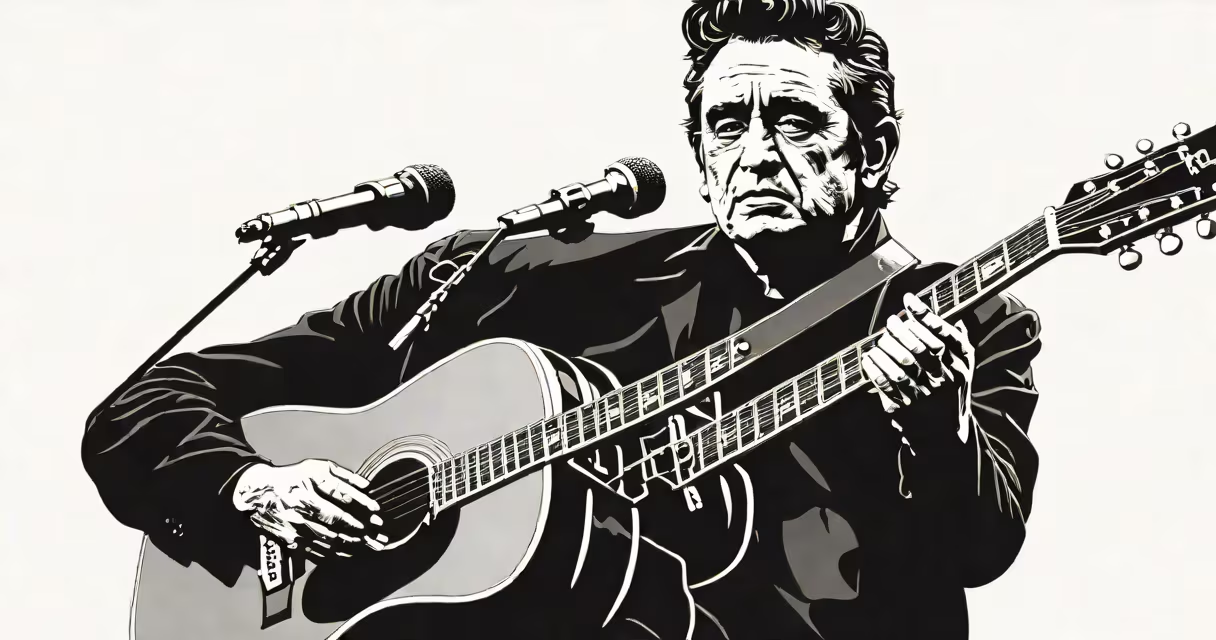
The man in black was Johnny Cash's iconic persona, representing rebellion, solidarity with the oppressed, and his personal struggles. The name came from his signature black outfits and the 1971 song Man in Black, where he explained his choice.
Cash began wearing black in the 1950s, but the look became symbolic during the 1960s and 1970s. His black clothing stood out against the colorful stage costumes of other country artists, making him instantly recognizable. It also reflected his empathy for social outcasts and his own battles with addiction and depression.
The man in black carried multiple meanings:
Cash wore black in performances, photoshoots, and public appearances. The look reinforced his image as a serious, introspective artist. In his song Man in Black, he explained that he'd stop wearing black "when the world is fair," a statement that resonated with audiences during turbulent times like the Vietnam War and civil rights movement.
Some assume the man in black was just a stylistic choice, but Cash himself clarified its deeper purpose. He didn't wear black for shock value-it was a deliberate statement of solidarity. Another mistake is linking it solely to gothic or dark aesthetics. While the look was striking, its real power lay in its social and political message.
I once saw a documentary where Cash described his black outfit as "a badge of honor for the oppressed." That stuck with me-it wasn't about fashion, but about standing with those who had no voice.