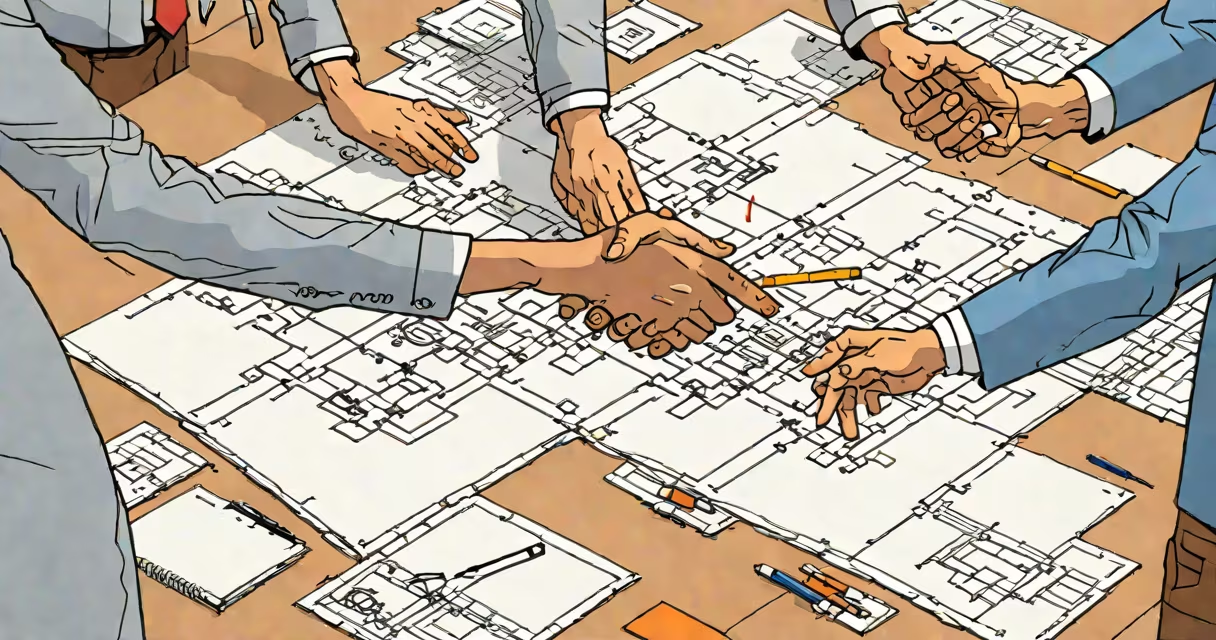
"To square up" means to settle a debt or resolve a disagreement. The phrase combines the mathematical idea of squaring (making equal) with the notion of settling accounts. It often appears in contexts involving money or conflicts.
The phrase comes from the idea of balancing accounts, like squaring numbers in math. When you square up, you make things even. This could mean paying back money owed or resolving a dispute fairly. The phrase is informal but widely understood in American English.
For example, if you borrow $20 from a friend and later repay them, you've squared up your debt. Similarly, if two people argue but then agree on a solution, they've squared up their disagreement.
The phrase appears in two main situations:
Most often, you'll hear "square up" in casual conversation or informal settings. It's rare in formal writing or professional contexts.
People sometimes confuse "to square up" with "square one," which means starting over. These phrases have different origins and uses. "Square one" comes from board games, while "square up" relates to balancing accounts.
Another confusion arises with "square away," which means to organize or complete something. While related, these phrases aren't interchangeable.
I once borrowed $50 from a coworker to cover lunch for the team. Later that week, I gave them $50 cash and said, "Let's square up our lunch tab." This settled the debt and simply.
According to the Oxford English Dictionary, the phrase dates back to at least the early 20th century. It remains popular in American English, especially in casual speech.