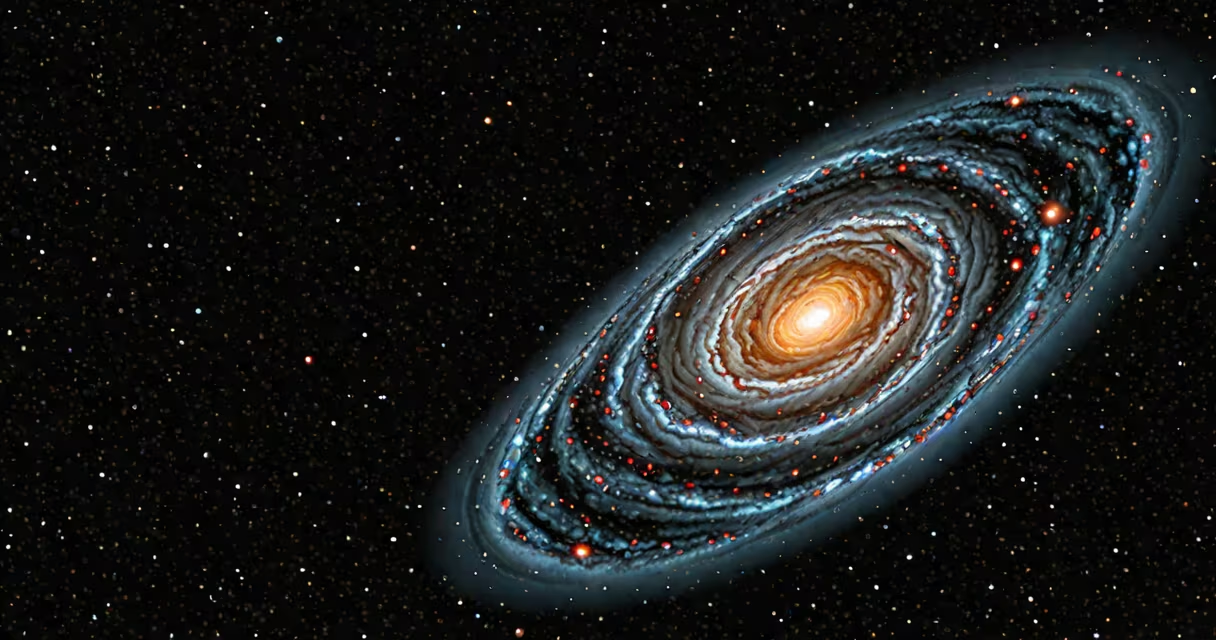
The top 10 mysteries of the universe are profound questions about space that remain unanswered despite decades of research. These include dark energy, black holes, and the nature of time itself.
Scientists use telescopes, satellites, and theoretical models to explore these mysteries. For example, the Hubble Space Telescope has captured images of distant galaxies, helping scientists understand their structure and evolution.
Cosmic mysteries fall into several categories, including fundamental physics, cosmology, and astrobiology. Here's a breakdown:
| Category | Examples |
|---|---|
| Fundamental Physics | Quantum gravity, nature of dark matter |
| Cosmology | Origin of the universe, dark energy |
| Astrobiology | Existence of extraterrestrial life, conditions for life |
These mysteries matter because they shape our understanding of the universe. For instance, dark energy, which makes up about 68% of the universe, drives its accelerated expansion. Without understanding it, we can't predict the universe's fate.
Many people confuse dark matter with black holes. Dark matter doesn't emit light and interacts only through gravity, while black holes are regions of spacetime where gravity is so strong that nothing can escape. Another misconception is that the Big Bang was an explosion in space. Instead, it was the rapid expansion of space itself.
The Fermi Paradox asks why, given the high probability of extraterrestrial civilizations, we haven't detected any signs of them. One explanation is the Great Filter hypothesis, which suggests that some barrier prevents civilizations from reaching interstellar travel. This mystery remains unsolved and highlights the challenges in searching for life beyond Earth.
I've always been fascinated by the Fermi Paradox. When I visited the SETI Institute, I saw firsthand how scientists use radio telescopes to scan the skies for signals from other civilizations. It's a humbling reminder of how much we still don't know.