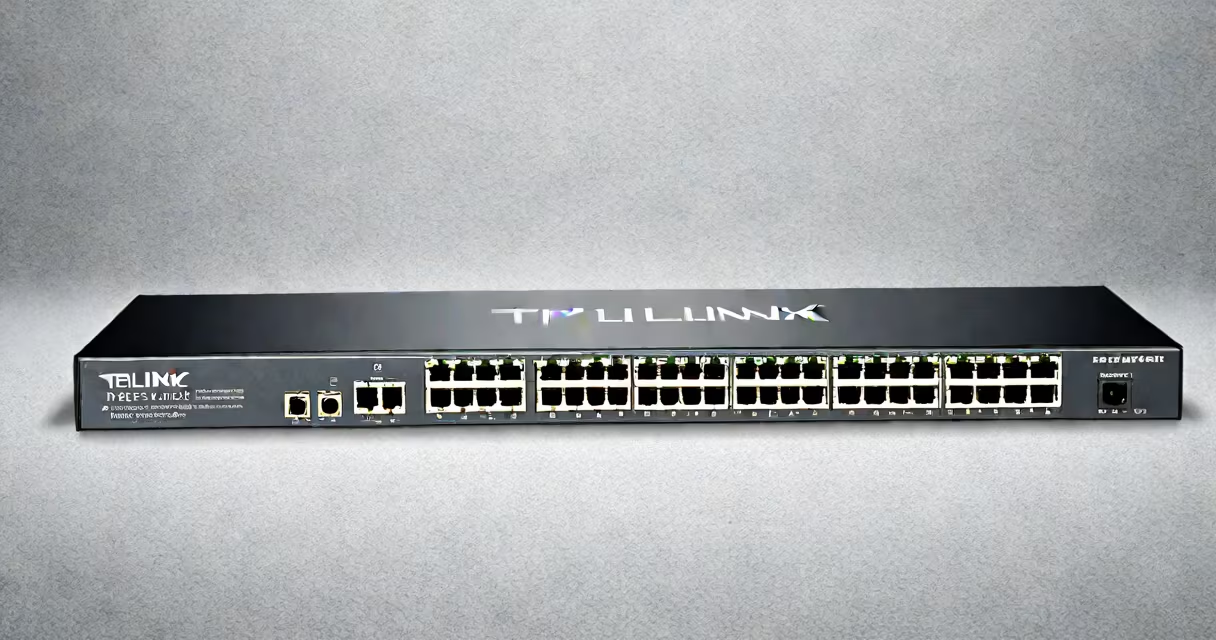
The TP-Link SG2428P is a 24-port gigabit managed switch with Power over Ethernet (PoE) capabilities, designed for business networks requiring advanced management features and high-speed connectivity.
The switch operates at the data link layer (Layer 2) of the OSI model, forwarding data packets based on MAC addresses. Its managed capabilities allow administrators to configure, monitor, and secure the network through a web interface or command-line interface (CLI). The PoE functionality powers connected devices like IP cameras and VoIP phones through Ethernet cables, eliminating the need for separate power supplies.
| Feature | Specification |
|---|---|
| Ports | 24 × Gigabit RJ45 ports |
| PoE | 24 × PoE+ ports (802.3at) |
| Total PoE power budget | 360W |
| Switching capacity | 52 Gbps |
| Forwarding rate | 38.69 Mpps |
| Management | Web-based, CLI, SNMP, RMON |
The TP-Link SG2428P is commonly deployed in business environments such as offices, schools, and retail stores where multiple wired devices require high-speed internet access and centralized management. Its PoE capabilities make it particularly suitable for IP surveillance systems and VoIP deployments. The switch's advanced features, including VLAN support, QoS, and security settings, enable network administrators to improve performance and reduce downtime.
For example, a small business with 20 employees using VoIP phones and 4 security cameras could use the SG2428P to connect all devices to the network while powering them through the Ethernet cables. The switch's management features would allow the IT administrator to prioritize voice traffic, isolate departments with VLANs, and monitor network health remotely.
Some users confuse the TP-Link SG2428P with unmanaged switches or basic smart switches. Unlike those, the SG2428P offers full Layer 2 management capabilities, including:
Another common mistake is assuming all PoE switches have the same power budget. The SG2428P's 360W budget is sufficient for most small-to-medium deployments but may require additional switches for larger installations.
When setting up a network for a client's office, I used the TP-Link SG2428P to connect 20 workstations, 5 VoIP phones, and 4 wireless access points. The switch's PoE capabilities simplified installation by eliminating the need for separate power adapters. Configuring QoS settings ensured clear voice calls even during peak network usage, and VLANs helped segment guest Wi-Fi traffic from internal resources.
While the initial setup required more time than a basic switch, the advanced features provided long-term benefits for network performance and security. The web interface was intuitive enough for occasional use, though power users might prefer the CLI for complex configurations.