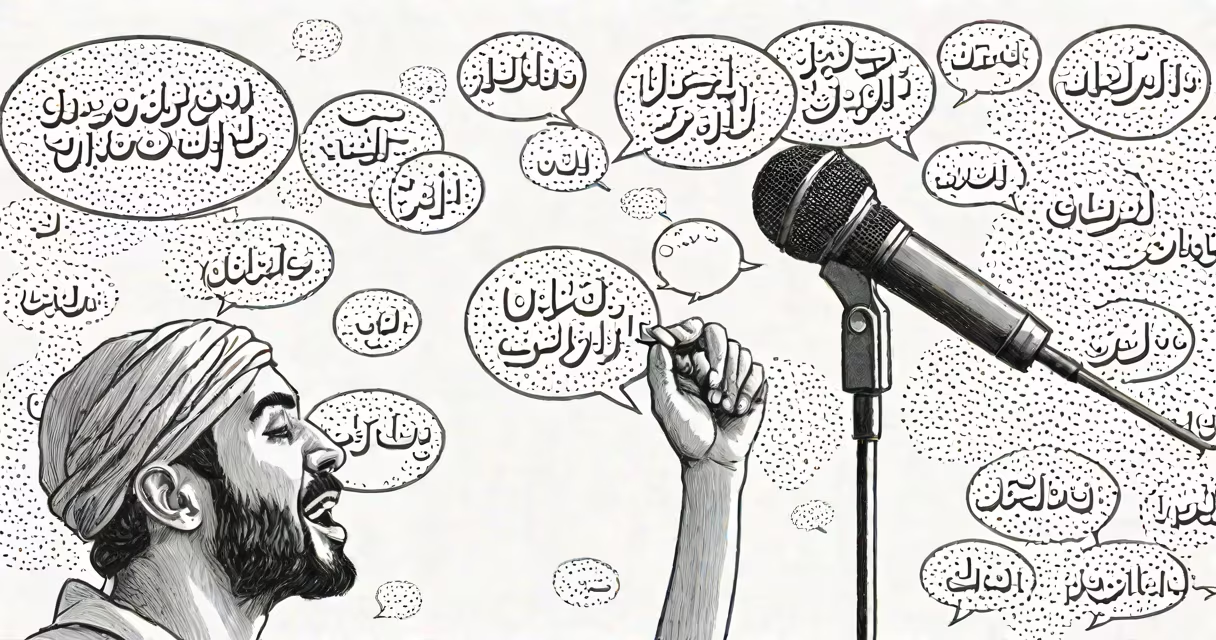
Translating Arabic speech to English involves converting spoken Arabic into written or spoken English using automated software or human translators. This process relies on speech recognition and machine translation technologies to bridge language barriers.
Speech translation systems first convert spoken Arabic into text using automatic speech recognition (ASR). The text is then translated into English using machine translation (MT) algorithms. Some systems can directly translate spoken Arabic into spoken English without an intermediate text step.
Modern systems use neural networks trained on vast amounts of bilingual data. For example, Google's Arabic-to-English translation system was trained on millions of Arabic-English sentence pairs from official documents and news articles (Google AI Blog, 2016).
| Type | Description | Example |
|---|---|---|
| Real-time translation apps | Translate spoken Arabic to English with minimal delay | Google Translate, Microsoft Translator |
| Offline translation software | Translate pre-recorded Arabic audio files to English | iTranslate, SayHi |
| Human translation services | Professional translators convert Arabic speech to English | Gengo, ProZ.com |
Arabic presents unique challenges for speech translation due to its complex morphology and diglossia (the coexistence of formal and colloquial varieties). For instance, Modern Standard Arabic (MSA) used in formal contexts differs from spoken dialects like Egyptian or Levantine Arabic.
A study by the University of Edinburgh found that Arabic-to-English translation accuracy drops by 15-20% when dealing with dialectal Arabic compared to MSA (University of Edinburgh, 2018).
For better results, speak and use standard Arabic when possible. Many systems perform better with formal language. Some advanced systems allow you to select specific Arabic dialects for more accurate translation.
When translating important content, consider using professional human translators for critical materials. For casual conversations, real-time translation apps provide adequate results.
This technology enables cross-lingual communication in business, diplomacy, healthcare, and education. It's particularly valuable in emergency situations where quick communication is important.
For example, during the 2015 refugee crisis, Arabic-to-English translation tools helped humanitarian workers communicate with Arabic-speaking refugees (UNHCR Report, 2016).