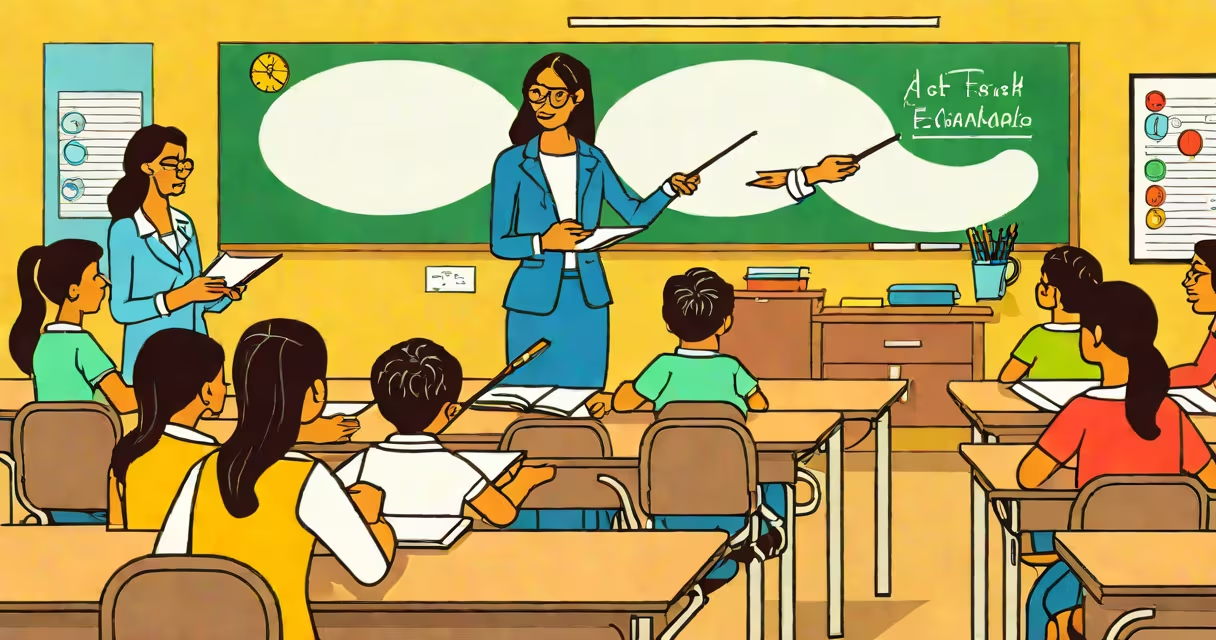
"Translate to teach in Spanish" refers to using translation as a method to convey educational content in Spanish. This approach involves converting instructional materials, lessons, or concepts from one language to Spanish to help learning.
Translation in teaching involves converting educational content from one language to another. For Spanish language education, this means translating instructional materials, textbooks, or even classroom instructions into Spanish. The goal is to make the content accessible to Spanish-speaking students or those learning Spanish.
For example, a math teacher might translate problem sets into Spanish to help Spanish-speaking students understand the material better. Similarly, a science teacher might translate key terms and concepts into Spanish to ensure comprehension.
| Type | Description | Example |
|---|---|---|
| Direct Translation | Converting text word-for-word from one language to another. | Translating "The water is cold" to "El agua está fría." |
| Contextual Translation | Adapting text to fit the cultural and educational context of the target language. | Translating a math problem that includes cultural references suitable for a Spanish-speaking audience. |
| Technical Translation | Specialized translation of technical terms and concepts. | Translating scientific terms like "photosynthesis" to "fotosíntesis." |
Translation is used in various educational settings, including bilingual classrooms, language learning programs, and online educational platforms. It helps bridge language barriers and helps all students, regardless of their native language, have access to the same educational content.
For instance, in a bilingual school in the United States, teachers might use translation to ensure that Spanish-speaking students can follow along with the curriculum. Similarly, online platforms like Duolingo or Rosetta Stone use translation to help users learn new languages.
One common misconception is that direct translation is always the best approach. However, this can lead to loss of meaning or cultural context. For example, translating idioms literally can result in confusion. Instead, contextual translation is often more effective.
Another misconception is that translation is only necessary for language classes. In reality, it can be beneficial in any subject where students speak different languages. For example, a history teacher might translate key dates and events into Spanish to ensure all students understand the material.
As a teacher, I once had a student who struggled with understanding English instructions. By translating the lesson plans into Spanish, I was able to help the student grasp the material more effectively. This experience highlighted the importance of using translation as a tool in education.