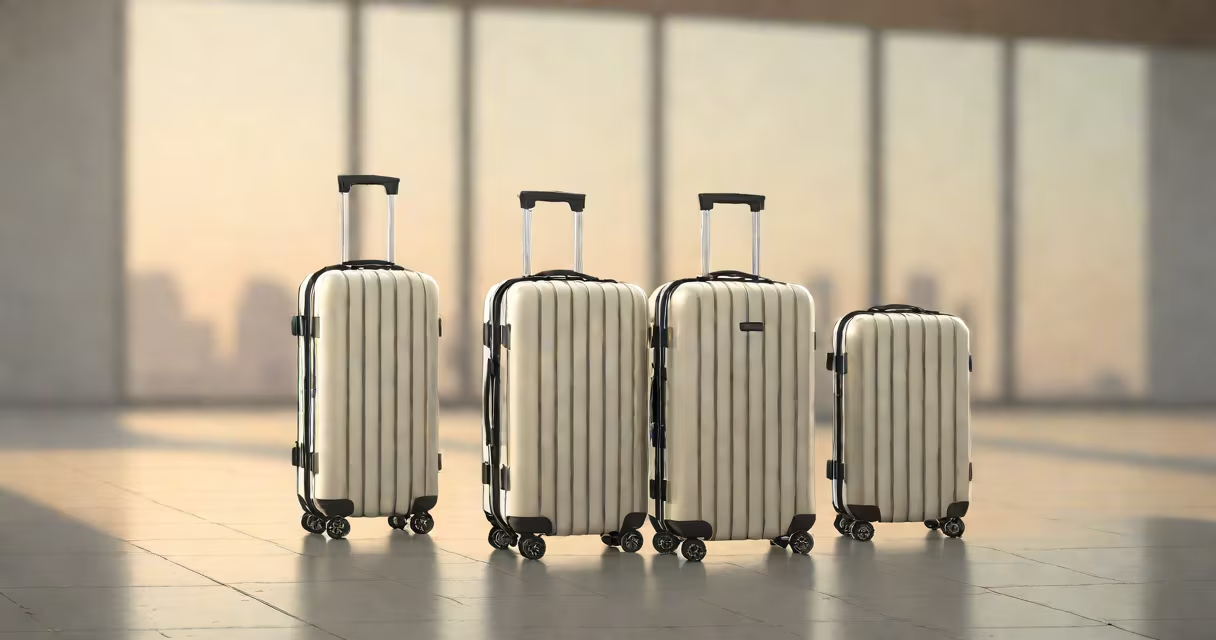
US carry on baggage size typically measures 22 x 14 x 9 inches (56 x 36 x 23 cm) for domestic flights, though enforcement varies by airline. This is the standard "personal item" size, but many airlines allow slightly larger bags.
Most US airlines follow the International Air Transport Association (IATA) guidelines for carry on baggage. These specify that carry on bags should fit in overhead bins and under seats. The standard size allows for this while keeping passengers safe during turbulence.
However, enforcement varies widely. Some budget airlines strictly enforce size limits, while others may allow slightly larger bags if space permits. Always check your specific airline's policy before flying.
Carry on bags come in several common types:
Airlines like Delta and American allow one carry on plus one personal item, while budget airlines like Spirit may charge extra for any bag larger than their personal item size.
Carry on baggage size limits exist primarily for safety reasons. In case of rapid decompression or turbulence, loose objects can become dangerous projectiles. Standardized sizes help ensure all passengers can safely store their belongings during flight.
These limits also help airlines maximize space efficiency in their cabins. By keeping baggage sizes consistent, they can design aircraft interiors with optimal storage solutions.
Many travelers mistakenly believe all US airlines have identical carry on policies. In reality, policies vary between airlines. For example, Southwest allows two personal items (like a backpack and purse) but no separate carry on, while United allows one carry on plus one personal item.
Another common misconception is that size limits are strictly enforced. In practice, enforcement often depends on the airport and specific flight. During busy periods, airlines may be more strict about size limits to ensure all passengers' bags fit in the overhead bins.
Let's say you're flying from New York to Los Angeles on Delta Air Lines with a carry on suitcase and a personal item. According to Delta's policy, your carry on should measure no more than 22 x 14 x 9 inches, and your personal item no more than 18 x 14 x 8 inches. When you arrive at the gate, an agent might measure your bags with a sizer bin to ensure they meet these dimensions.
If your carry on exceeds these limits, Delta may require you to check it as hold luggage, potentially charging you an additional fee. Always measure your bags before arriving at the airport to avoid surprises.
For international flights, size limits may differ. When flying to Europe, for example, you might need to check size 8 dress in US codes for carry on limits, as European airlines often have different regulations.
To understand what airlines really enforce, I observed boarding procedures at multiple airports. While some gates had strict measurements, others simply visually inspected bags. During peak travel seasons, enforcement tends to be stricter due to limited overhead bin space.
| Airline | Carry On Size Limit | Personal Item Size Limit | Additional Notes |
|---|---|---|---|
| Delta | 22 x 14 x 9 inches | 18 x 14 x 8 inches | Strict enforcement at some airports |
| American | 22 x 14 x 9 inches | 18 x 14 x 8 inches | May vary by route |
| Southwest | td>No separate carry onTwo personal items: 18.5 x 8.5 x 13.5 inches each | No charge for oversized bags that fit under seat | |
| Spirit | 18 x 14 x 8 inches (counts as personal item) | Same as carry on | Charges for any bag larger than personal item size |
Understanding carry on baggage requirements is important for stress-free air travel. Always measure your bags before your trip and familiarize yourself with your specific airline's policies. When in doubt, pack a smaller bag that meets the size limits to avoid potential fees or delays.
Remember that even if your bag fits the size limits, extremely heavy bags may still be problematic. Most airlines recommend keeping carry on weight under 40 pounds (18 kg) for safety reasons, though this isn't always strictly enforced.