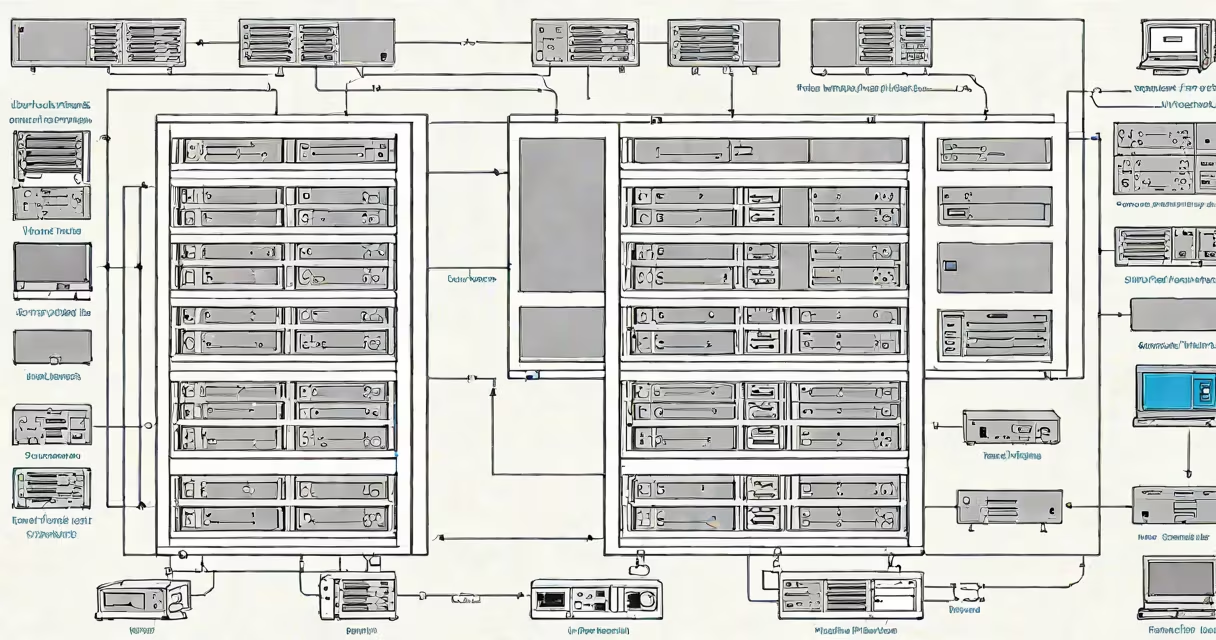
The VMware vSphere Storage Appliance (VSA) was a hypervisor-converged storage solution that pooled local disk resources from ESXi hosts to create shared storage. It eliminated the need for external storage arrays by using existing server hardware.
VSA operated by aggregating local disks from multiple ESXi hosts (minimum 3 nodes) into a single storage pool. This pool was then presented as shared storage to all participating hosts via iSCSI. The appliance ran as a virtual machine on each host, managing storage operations and maintaining data redundancy through RAID configurations.
The VSA consisted of several key components:
VSA supported two deployment models:
| Model | Description |
|---|---|
| Standard | Basic configuration with local disk protection (RAID 1/10). |
| Advanced | Added fault tolerance with distributed RAID (RAID 5/6). |
VSA was primarily targeted at small and medium-sized businesses (SMBs) that lacked the budget for traditional SAN/NAS systems. It enabled these organizations to implement VMware's software-defined data center (SDDC) architecture without requiring expensive external storage infrastructure.
Common use cases included:
Many users confused VSA with VMware's vSAN (Virtual SAN) solution. While both provide hypervisor-converged storage, they differ in architecture and capabilities. VSA was limited to a maximum of 4 hosts and 15TB of raw storage, whereas vSAN supports much larger clusters and storage capacities.
Another misconception was that VSA could replace enterprise-grade storage systems. While it served SMB needs well, it lacked the performance, scalability, and advanced features required by larger enterprises.
When I worked with a small accounting firm looking to virtualize their environment, we implemented VSA to avoid the high cost of external storage. By pooling the local disks of their three servers, we created a shared storage solution that supported their virtualized applications and databases effectively. This setup proved reliable for their needs while staying within budget constraints.
VMware discontinued the VSA in 2014, shifting focus to its vSAN product. For those needing similar functionality today, alternatives include: