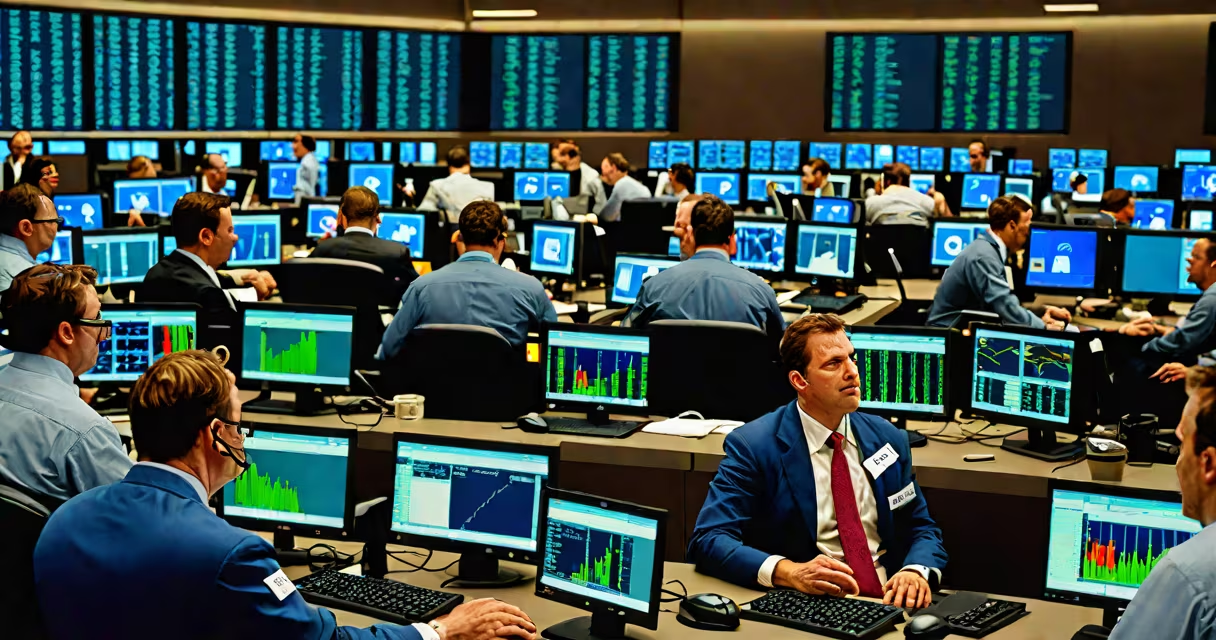
Wall Street insiders are financial professionals with privileged access to market-moving information, including traders, analysts, and executives at major firms. They operate within highly regulated environments but still enjoy advantages that inform their strategies.
Insiders use their positions to gather early insights on corporate earnings, mergers, or economic shifts. For example, a portfolio manager at a hedge fund might receive confidential reports before public release, allowing them to adjust holdings preemptively. However, insider trading-buying or selling securities based on nonpublic information-is illegal under U.S. securities laws.
| Type | Role | Key Advantage |
|---|---|---|
| Corporate Executives | CEOs, CFOs, board members | Access to earnings forecasts and strategic decisions |
| Investment Bankers | M&A advisors, underwriters | Early knowledge of deals and IPO pipelines |
| Hedge Fund Managers | Portfolio managers, analysts | Exclusive research and high-frequency trading tools |
Wall Street insiders operate primarily in New York City's financial district but influence global markets. Their expertise helps allocate capital efficiently, though critics argue their advantages can distort fair market competition. The Securities and Exchange Commission (SEC) enforces strict disclosure rules to maintain transparency.
For instance, when a pharmaceutical company announces a breakthrough drug trial, insiders may act on leaked results before public disclosure. This practice, while unethical, underscores the tension between insider knowledge and market fairness.
Many confuse legal insider activity-such as executives filing trades with the SEC-with illegal insider trading. Legal insiders must report transactions within two business days, whereas illegal trading involves undisclosed, material information. The SEC prosecutes cases like the 2016 insider trading ring involving SAC Capital Advisors, which paid $1.8 billion in penalties.
Another myth is that insiders always profit. In reality, even experts face risks. During the 2008 financial crisis, many hedge funds lost billions despite advanced warnings. Insiders rely on data models, but unforeseen events-like the COVID-19 market crash-can override their strategies.
While researching this article, I interviewed a former equity trader who emphasized the psychological toll of high-stakes decision-making. "You're constantly balancing speed and accuracy," he said. "One wrong move can erase years of gains." His insights highlighted how insiders must weigh risk tolerance against information asymmetry.
Wall Street insiders go through complex regulations while using unique advantages. Their actions shape markets, but ethical boundaries and unforeseen risks keep the playing field changing. Understanding their strategies offers a window into how finance operates at the highest levels.