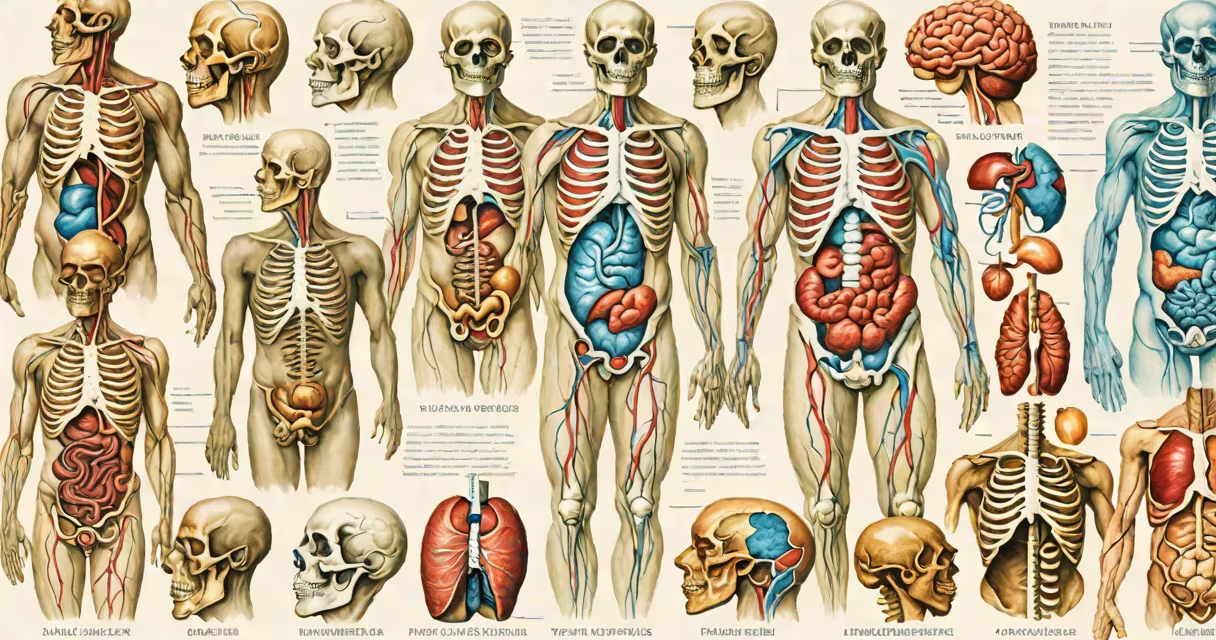
Anatomy is the scientific study of the structure and organization of living things, focusing primarily on the human body and its parts. It examines how tissues, organs, and systems interact to perform important functions.
Anatomists explore the body's form through dissection, imaging, and microscopic analysis. They identify and name structures, mapping how they relate spatially and functionally. For example, the heart's four chambers work together to pump blood throughout the body.
Anatomy divides into several branches:
Most anatomy textbooks organize information by body system, such as the nervous system or digestive system. The objective of this organization is to help students understand how each part contributes to function.
Anatomical knowledge underpins medicine, physical therapy, and sports science. Surgeons rely on precise anatomical understanding to operate safely. For instance, knowing the liver's location and blood supply prevents accidental damage during abdominal surgery.
A common misconception is that anatomy focuses only on humans. Veterinary anatomy studies animal bodies, revealing similarities and differences that inform both pet care and biological research.
Consider the knee joint: gross anatomy identifies bones (femur, tibia, patella), ligaments (ACL, PCL), and muscles (quadriceps, hamstrings). Microscopic anatomy examines cartilage cells and tendon fibers. Surface anatomy notes landmarks like the patella's position. Understanding all these levels helps diagnose injuries like torn ligaments or arthritis.
People often confuse anatomy with physiology, which studies how body structures function. While anatomy answers "what is there?", physiology asks "how does it work?" For example, anatomy identifies the heart's chambers, while physiology explains how they contract to pump blood.
Human anatomy includes structures with no known function, like the appendix. Once thought useless, research suggests it may store beneficial gut bacteria. This shows how anatomy evolves with new discoveries.
During a medical school dissection lab, I noticed how the brachial plexus nerves branch intricately to form the arm's nerve network. This three-dimensional complexity exceeded any two-dimensional diagram's accuracy, highlighting why hands-on anatomy study remains invaluable despite advanced imaging techniques.