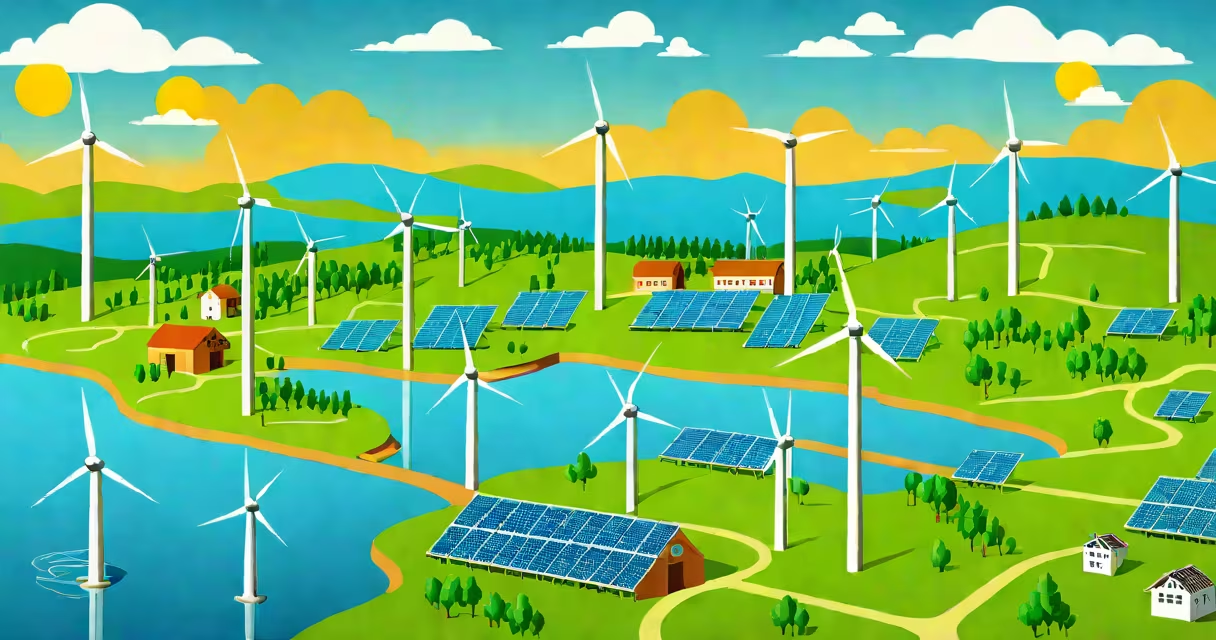
Renewable energy resources are natural sources that replenish themselves over time, providing sustainable power. The three most prominent types are solar, wind, and hydroelectric energy. These sources reduce carbon emissions and dependence on finite fossil fuels.
Renewable energy harnesses natural processes to generate electricity. Solar panels convert sunlight into energy using photovoltaic cells. Wind turbines change wind motion into mechanical energy, which then generates electricity. Hydroelectric plants use flowing or falling water to spin turbines connected to generators.
| Type | Description | Global Capacity (2023) |
|---|---|---|
| Solar Power | Uses photovoltaic cells to convert sunlight into electricity | 1,276 GW |
| Wind Energy | Harnesses wind power through turbines to generate electricity | 934 GW |
| Hydroelectric Power | Generates electricity using the energy of falling or fast-flowing water | 1,408 GW |
Renewable energy is deployed globally to reduce greenhouse gas emissions and combat climate change. Solar farms, like the Bhadla Solar Park in India, cover vast areas to maximize sunlight exposure. Wind farms, such as the Hornsea Project in the UK, are often located offshore to capture stronger winds. Hydroelectric dams, like the Three Gorges Dam in China, provide both electricity and flood control.
Many people confuse renewable energy with biofuels, which are organic materials converted into fuel. While biofuels are renewable, they are not as widely used as solar, wind, and hydroelectric power. Another misconception is that renewable energy is unreliable due to weather dependency. However, advancements in energy storage and grid management have mitigated these issues.
I visited a solar farm in California and was struck by the scale of the installation. Rows of panels stretched as far as the eye could see, highlighting the potential of solar energy to meet global demand.
Renewable energy costs have dropped over the past decade. Solar panel prices have fallen by about 80% since 2010, making solar power one of the cheapest energy sources. Wind energy costs have also decreased, becoming competitive with conventional energy sources. Governments worldwide are investing in renewable energy to create jobs and stimulate economic growth.
Renewable energy resources like solar, wind, and hydroelectric power are key in transitioning to a sustainable future. Their widespread adoption reduces environmental impact and ensures long-term energy security. Understanding these resources is the first step toward embracing cleaner energy solutions.