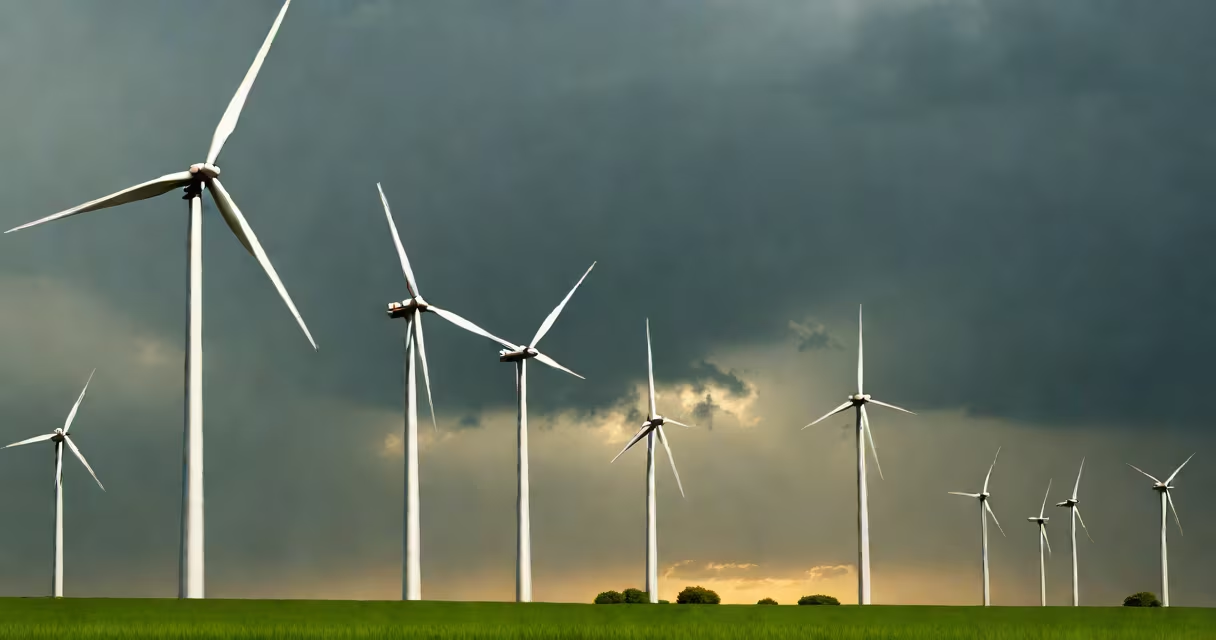
Wind energy has five key disadvantages: high upfront costs, intermittent power generation, environmental impacts, noise pollution, and land use concerns. These challenges affect its reliability and adoption.
Building wind farms requires significant investment. A single megawatt turbine costs $1.3 million to $2.2 million, including installation and infrastructure (NREL). Offshore projects are even more expensive due to complex engineering requirements.
However, costs drop over time. The levelized cost of energy (LCOE) for onshore wind fell 70% between 2009 and 2021 (IRENA).
Wind energy is unreliable because wind speeds fluctuate. A turbine generates maximum power at 25-34 mph but drops to 50% capacity below 15 mph (DOE).
This inconsistency forces reliance on backup power sources. Texas's 2021 blackouts occurred when freezing weather reduced wind output by 50%.
Wind turbines kill 573,000 birds and 888,000 bats annually in the U.S. (USGS).
Offshore turbines disrupt marine ecosystems. Noise during construction harms whales, while electromagnetic fields from cables interfere with fish migration.
Turbines generate 40-60 decibels at hub height, comparable to a vacuum cleaner. While inaudible at ground level, low-frequency hums travel farther and disturb nearby residents (CDC).
Onshore wind farms require 0.3 acres per megawatt, less than solar farms but still substantial. Offshore projects face opposition from fishing industries and coastal communities.
Transmission lines for remote wind farms degrade local landscapes. In Wyoming, 300 turbines span 100 square miles, disrupting grazing patterns.