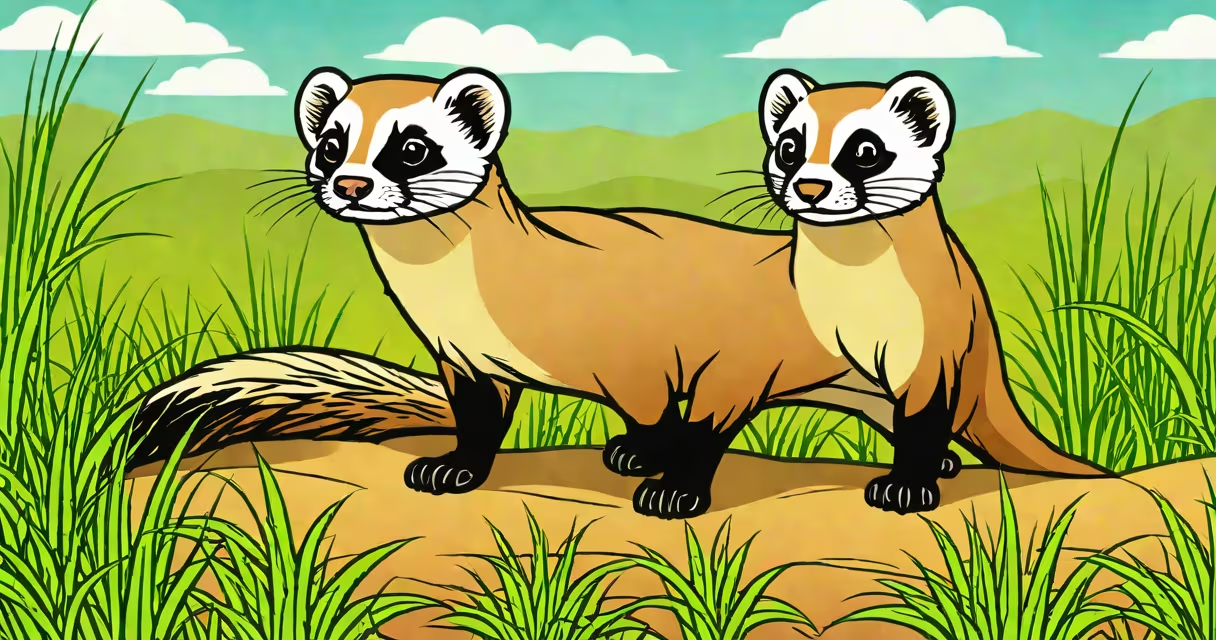
Black-footed ferret predators are animals that hunt and kill black-footed ferrets, including coyotes, badgers, and golden eagles. These predators impact ferret populations, contributing to their endangered status.
Black-footed ferrets rely on prairie dogs for food and shelter. When predators reduce prairie dog numbers, ferrets lose their primary food source and face increased exposure to threats. Coyotes, their most significant predator, can decimate entire ferret populations in a single season.
| Predator | Threat Level | Impact on Ferrets |
|---|---|---|
| Coyotes | High | Kill adult ferrets and young kits, often during breeding season |
| Badgers | Medium | Compete for prairie dog burrows and may attack ferrets |
| Golden Eagles | Medium | Prey on ferrets above ground, especially during daylight hours |
| Great Horned Owls | Low | Occasionally prey on ferrets at night |
Wildlife biologists use vaccination to protect prairie dogs from sylvatic plague, which indirectly benefits ferrets. For instance, the U.S. Fish & Wildlife Service reported a 20% increase in ferret populations after implementing these measures in Wyoming.
Some conservation programs relocate ferrets to areas with fewer predators. However, this strategy requires careful monitoring to ensure long-term success.
Many people assume domestic cats pose a significant threat to ferrets. While cats may attack young or injured ferrets, they do not impact populations. The primary threats remain wild predators like coyotes and badgers.
During my time volunteering at a wildlife rehabilitation center, I assisted in building predator-proof enclosures for black-footed ferrets. These structures, combined with habitat restoration, gave the ferrets a fighting chance against their natural enemies.