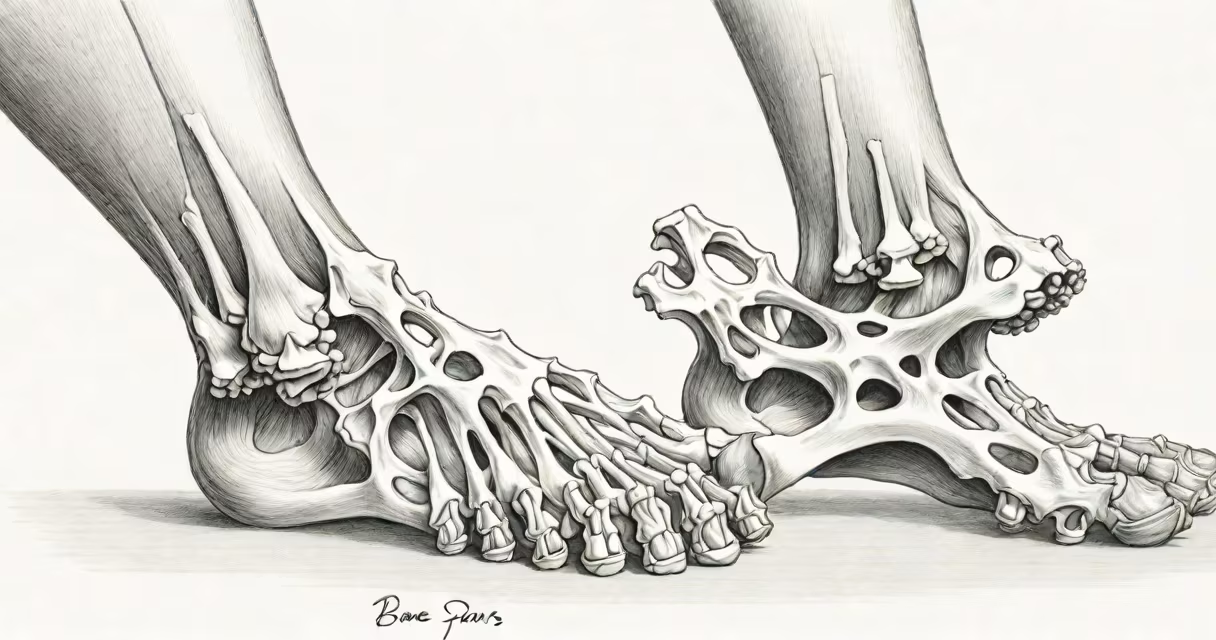
Bone spurs in your foot are bony projections that develop along bone edges, typically due to inflammation, repetitive stress, or aging. They often form where bones meet, such as the heel or big toe.
Bone spurs form as the body's attempt to protect itself from stress or injury. The body lays down extra bone material in response to inflammation or wear and tear. Over time, this buildup can create a spur.
| Type | Location | Common Cause |
|---|---|---|
| Calcaneal Spur | Heel | Plantar fasciitis or repetitive stress |
| Hallux Rigidus Spur | Big toe joint | Aging or arthritis |
| Metatarsal Spur | Ball of the foot | High-impact activities or ill-fitting shoes |
Many people with bone spurs in their feet don't experience symptoms. However, when they do, common signs include:
Doctors diagnose bone spurs through physical exams and imaging tests like X-rays or MRIs. A study published in the Journal of Foot & Ankle Surgery found that X-rays are the most reliable method for detecting bone spurs.
Treatment depends on the severity of symptoms. For mild cases, rest, ice, and over-the-counter pain relievers may help. Custom orthotics or shoe inserts can reduce pressure on the spur.
In severe cases, corticosteroid injections or surgery may be necessary. A study in Foot & Ankle International found that surgical removal of bone spurs provides long-term relief for most patients.
Many people confuse bone spurs with heel spurs, assuming they're always painful. However, many bone spurs go unnoticed unless they press on nerves or soft tissues., bone spurs aren't exclusive to the elderly-they can develop in younger individuals due to repetitive stress or injury.
For instance, athletes who run frequently may develop bone spurs in their feet due to the constant impact. Proper footwear and rest can help prevent their formation.
While bone spurs in the foot are common, understanding their causes and treatments can help manage symptoms effectively. If you suspect you have a bone spur, consult a healthcare provider for proper diagnosis and treatment options.