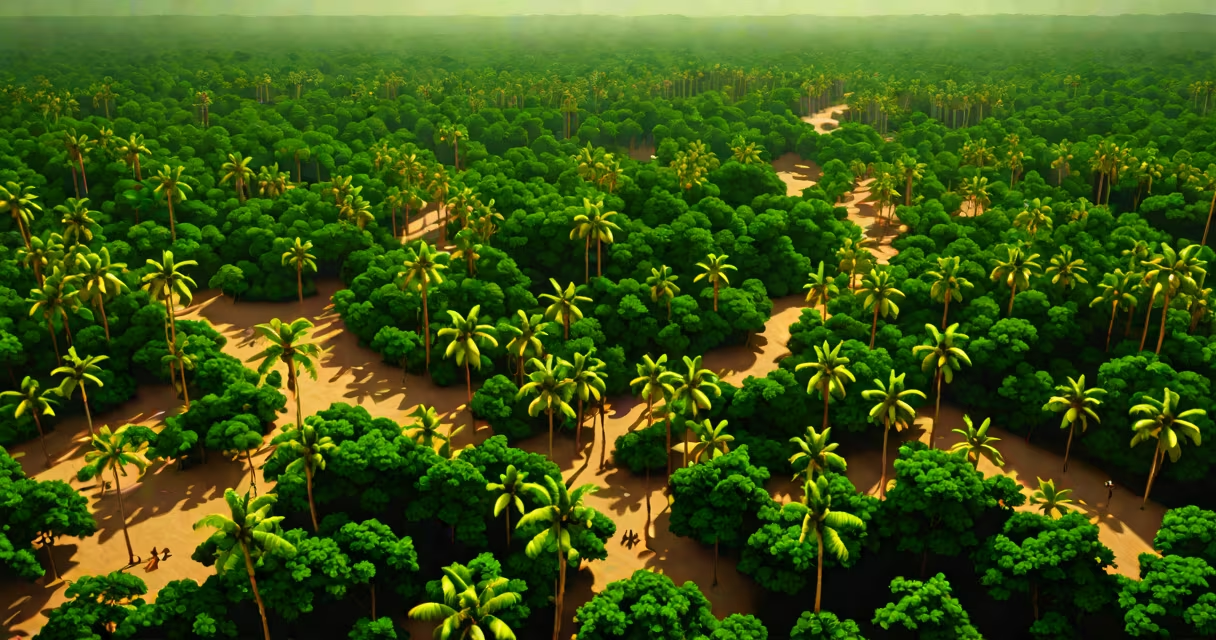
Deforestation causes five primary effects: climate change, biodiversity loss, soil erosion, disruption of water cycles, and economic impacts. These effects create a cascading set of problems for ecosystems and human communities.
Deforestation occurs when large areas of forest are cleared for agriculture, logging, or urban development. Trees absorb carbon dioxide, so removing them releases stored carbon into the atmosphere. This process disrupts ecosystems and reduces the planet's capacity to regulate itself.
The World Wildlife Fund reports that approximately 10 million hectares of forest are lost annually. This rate of destruction has severe consequences for both local environments and global systems.
Deforestation falls into three main categories:
Deforestation occurs most frequently in tropical regions, such as the Amazon rainforest, Southeast Asia, and Central Africa. These areas are rich in biodiversity and play important roles in regulating the global climate. Land is often cleared for economic gain, despite the long-term environmental costs.
Many people believe that deforestation only affects remote areas. However, its effects are global. For example, deforestation contributes to climate change, which impacts weather patterns worldwide., some argue that reforestation can fully reverse the damage, but regrowing forests takes decades or even centuries to restore lost ecosystems.
The Amazon rainforest, often called the "lungs of the Earth," has lost about 17% of its forest cover since 1970. This deforestation has led to increased carbon emissions, habitat destruction, and reduced rainfall in the region. Scientists warn that if deforestation continues at this rate, the Amazon could transition from a carbon sink to a carbon source, accelerating climate change.
During a trip to Brazil, I saw firsthand the stark contrast between intact rainforest and recently cleared land. The cleared areas were barren, with little signs of life compared to the dense, thriving forests nearby. This experience reinforced the urgency of addressing deforestation on a global scale.
Deforestation involves clearing entire areas of forest, while selective logging removes only certain trees. Although selective logging is less destructive, it still fragments habitats and reduces biodiversity. Both practices contribute to environmental degradation but at different scales.
| Aspect | Deforestation | Selective Logging |
|---|---|---|
| Scale of Impact | Large-scale destruction | Smaller, targeted removal |
| Biodiversity Loss | Severe habitat destruction | Moderate habitat fragmentation |
| Carbon Release | Massive carbon emissions | Lower carbon emissions |
For more details on the effects of deforestation, see our guide on three effects of deforestation. Understanding these impacts is important for developing sustainable solutions.
To learn about another environmental issue, read about effects of environmental degradation and their long-term consequences.