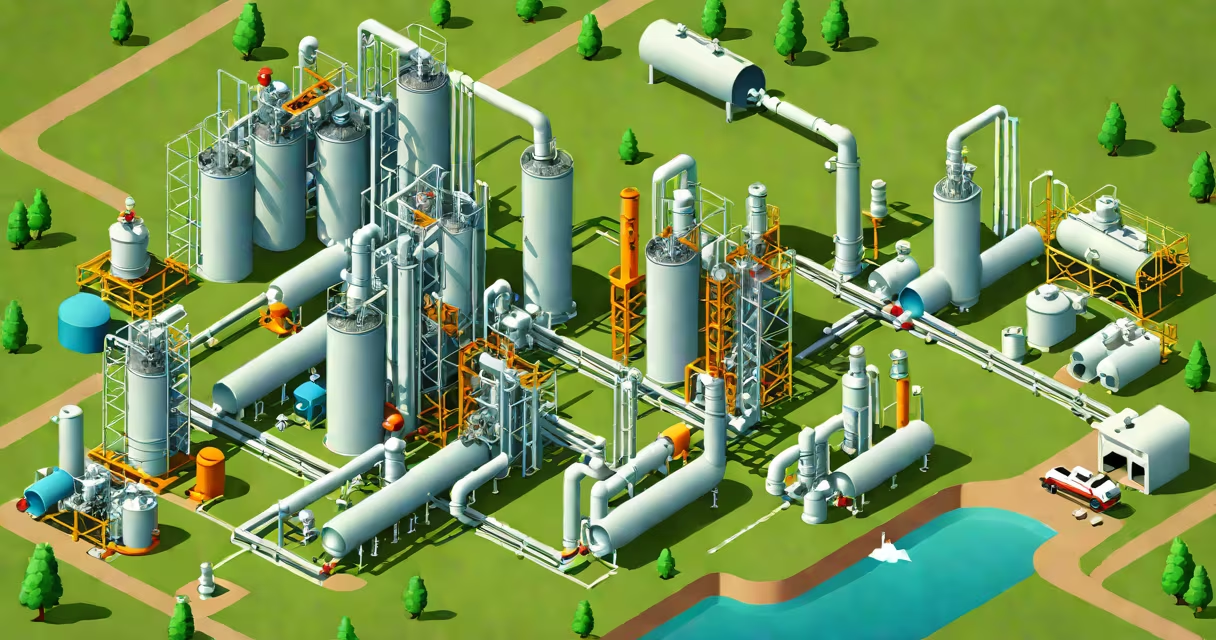
Natural gas is a versatile fossil fuel used for heating, electricity generation, transportation, and industrial processes. Its clean-burning properties make it a preferred energy source across multiple sectors.
Natural gas serves three primary functions: space heating, water heating, and cooking. In residential settings, it powers furnaces, boilers, and stoves. Commercial buildings use it for similar purposes, often at larger scales. Industrial facilities rely on it for process heating, steam generation, and as a raw material in chemical manufacturing.
| Type | Key Uses | Examples |
|---|---|---|
| Compressed Natural Gas (CNG) | Vehicle fuel | Public transportation buses, fleet vehicles |
| Liquefied Natural Gas (LNG) | Long-distance transport, peak shaving | Intercontinental shipping, power plants |
| Pipeline Gas | Residential, commercial, industrial use | Home heating, factory operations |
Factories use natural gas as both fuel and feedstock. The chemical industry converts it into hydrogen, ammonia, and methanol. Food processors employ it for drying, baking, and sterilization. Hospitals depend on it for sterilizing equipment and powering backup generators.
One non-obvious application is in glass manufacturing. Float glass production requires precise temperature control that natural gas provides efficiently. According to the U.S. Energy Information Administration, the glass industry consumes about 4% of total U.S. natural gas usage annually.
People often confuse natural gas with propane, assuming they're interchangeable. While both are hydrocarbons, natural gas primarily contains methane (CH₄), whereas propane is propane (C₃H₈). Propane has a higher energy density but requires different storage and handling.
Another mistake is equating natural gas with being "clean" in an environmental sense. While it burns cleaner than coal or oil, producing fewer pollutants, it still releases carbon dioxide-a greenhouse gas-and can leak methane during extraction and transport, which has a potent short-term warming effect.
A typical 500-megawatt combined-cycle natural gas power plant can generate enough electricity for about 500,000 homes. These plants use gas turbines that extract energy from hot gases produced by burning natural gas, then capture remaining heat to produce additional steam-driven power. This dual process achieves efficiency rates of up to 60%, compared to 30-40% for traditional coal plants.
I visited such a facility in Texas where operators explained how the plant adjusts output based on demand. During peak hours, it ramps up quickly-unlike coal plants-which helps stabilize the grid. The plant also stores liquefied natural gas (LNG) on-site for reliability during supply disruptions.
Emerging technologies are expanding natural gas uses. Fuel cells convert natural gas into electricity with high efficiency and low emissions. Synthetic natural gas (SNG) produced from biomass offers a renewable alternative. These innovations may increase demand while reducing environmental impact.