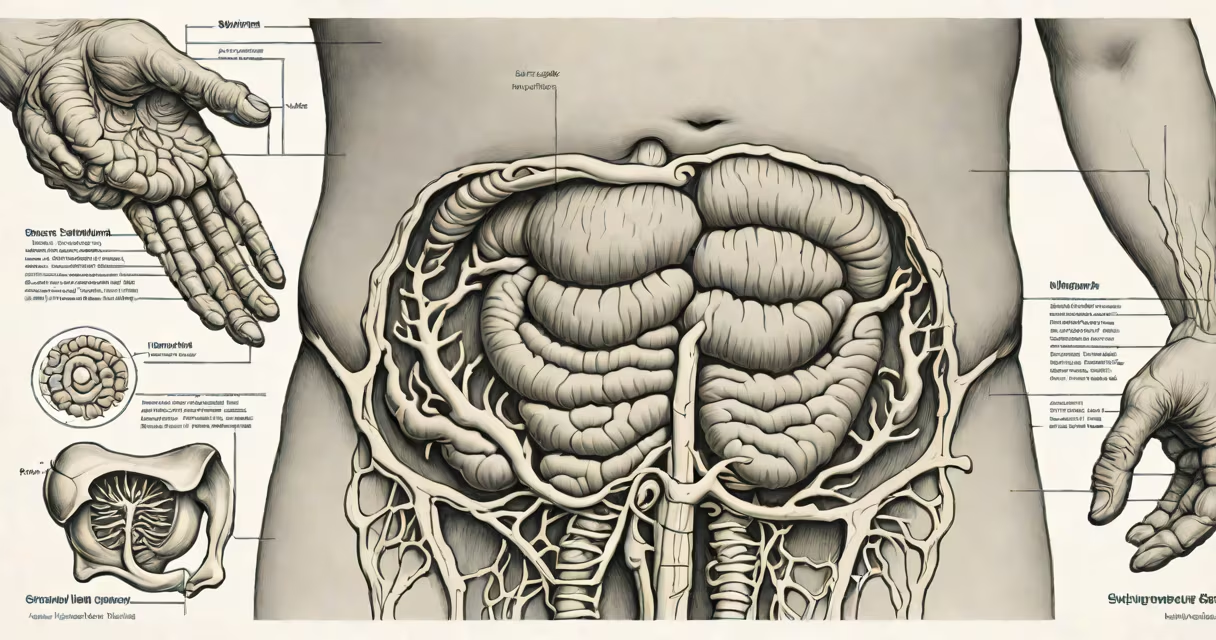
Swelling in the upper abdomen occurs when organs or tissues in this area enlarge, fill with fluid, or become inflamed. This swelling often results from digestive issues, organ enlargement, or inflammation.
The upper abdomen houses important organs like the stomach, liver, pancreas, and spleen. Swelling happens when these organs or surrounding tissues retain excess fluid, grow larger due to disease, or become inflamed. Common triggers include gas buildup, fluid accumulation, or tissue inflammation.
Swelling in the upper abdomen typically stems from digestive disorders, organ enlargement, or inflammation. Here are the primary causes:
Many people confuse swelling in the upper abdomen with general bloating or indigestion. While these can contribute, persistent or severe swelling often indicates a more serious underlying condition. For example, swelling in the upper left quadrant of the abdomen may signal an issue with the spleen or stomach, while swelling in the upper right quadrant could involve the liver or gallbladder.
Seek medical advice if swelling persists for more than a few days, worsens, or is accompanied by other symptoms like pain, nausea, or difficulty breathing. Persistent swelling could indicate conditions like liver disease, heart failure, or gastrointestinal disorders that require professional evaluation.
In my experience, sudden or severe swelling often prompts an immediate visit to the doctor. One patient I worked with noticed swelling in the upper abdomen along with sharp pain-tests revealed pancreatitis, which required urgent treatment.
Understanding the causes of swelling in the upper abdomen helps identify when to seek medical care. While mild swelling may resolve on its own, persistent or severe cases warrant professional evaluation to rule out serious conditions.