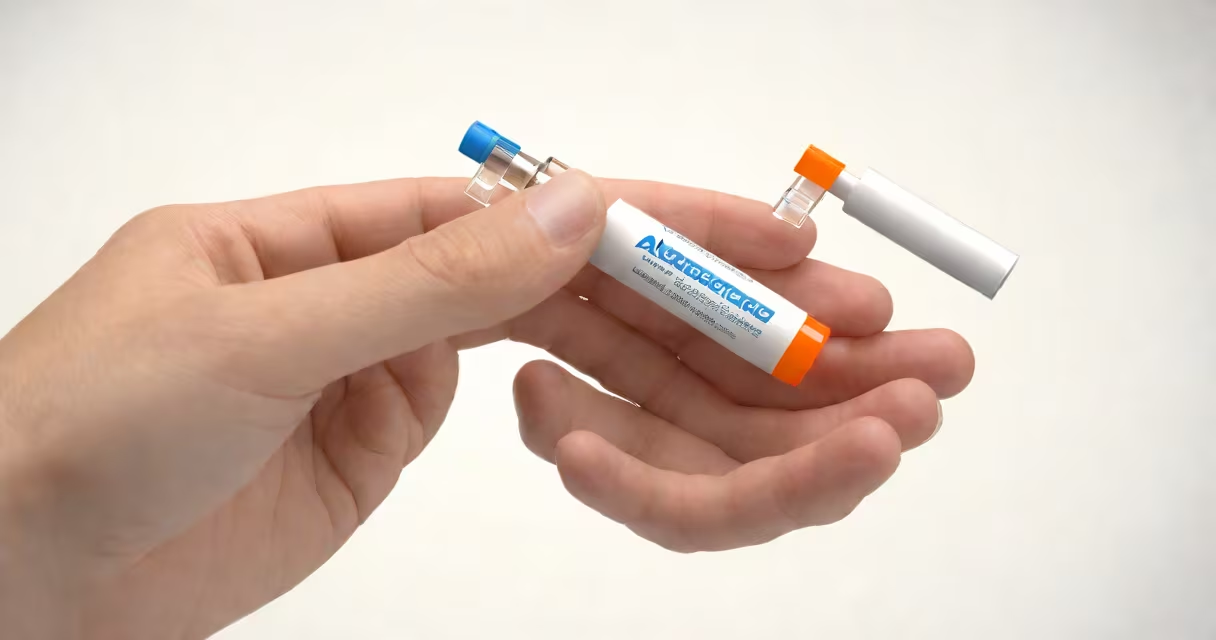
For mild allergic reactions, take over-the-counter antihistamines like cetirizine or diphenhydramine. For severe reactions, use epinephrine via auto-injector. Treatment depends on symptom severity and type.
Allergic reactions occur when your immune system overreacts to a normally harmless substance. The body releases histamines, causing inflammation, swelling, and other symptoms. Reactions range from mild (itchy eyes) to life-threatening (anaphylaxis).
Treatment varies by reaction severity:
| Reaction Severity | Recommended Treatment |
|---|---|
| Mild (itching, sneezing) | Antihistamines (loratadine, cetirizine) |
| Moderate (swelling, hives) | Antihistamines + corticosteroids (prednisone) |
| Severe (trouble breathing, anaphylaxis) | Epinephrine auto-injector (EpiPen) |
Many people confuse allergic reactions with cold symptoms, delaying proper treatment. Some try home remedies instead of medical intervention for severe reactions. Others don't carry emergency medication despite known allergies.
Seek immediate help if you experience:
These symptoms indicate anaphylaxis, which requires epinephrine and professional medical attention.
Last summer, I witnessed someone develop hives and difficulty breathing after eating shellfish. They used their EpiPen while calling 911. The quick action saved them - the paramedics arrived and took them to the hospital for monitoring. Always carry prescribed medication if you have known allergies.