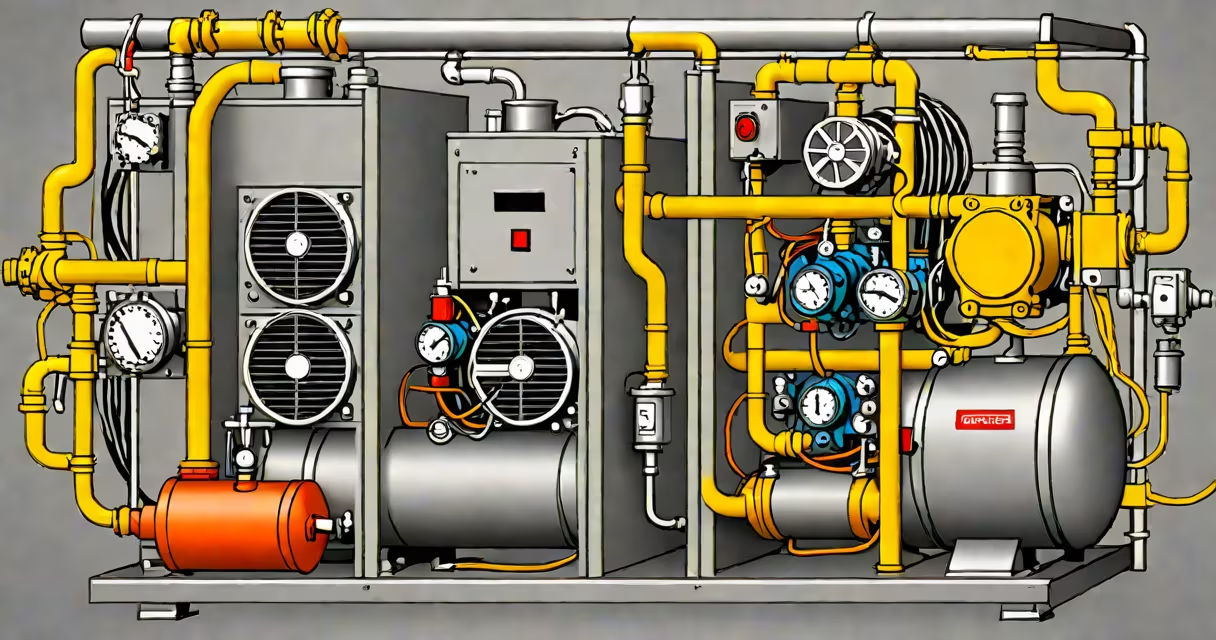
A compressor in HVAC systems pressurizes refrigerant gas, raising its temperature and enabling heat transfer to cool indoor spaces. This critical component powers both air conditioning and refrigeration cycles.
Compressors operate within the refrigeration cycle, which consists of four main stages: compression, condensation, expansion, and evaporation. The compressor initiates this process by increasing the pressure and temperature of refrigerant gas.
When the low-pressure, low-temperature refrigerant gas enters the compressor, it's pressurized to high pressure. This raises its temperature - often by 50°F or more. The hot, high-pressure gas then moves to the condenser coil, where it releases heat to the outdoor environment.
| Type | Key Characteristics | Common Applications |
|---|---|---|
| Reciprocating | Uses pistons in cylinders; durable and efficient for small systems | Residential air conditioners, small commercial units |
| Rotary | Single rotating component; compact and lightweight | Window air conditioners, small refrigeration systems |
| Scroll | Spiral-shaped components; energy-efficient and quiet | Residential and light commercial HVAC systems |
| Centrifugal | High-capacity; uses centrifugal force to compress refrigerant | Large commercial buildings, industrial applications |
Most residential HVAC systems use either scroll or reciprocating compressors due to their balance of efficiency and cost-effectiveness. Centrifugal compressors handle much larger cooling loads, typically above 50 tons of cooling capacity.
Many people confuse HVAC compressors with the compressor pumps used in air compressors for tools or inflation. While both pressurize gases, HVAC compressors specifically handle refrigerant gases in a closed loop system, whereas air compressors draw in atmospheric air.
Another frequent misunderstanding is that compressors create cold air directly. In reality, they raise the temperature of refrigerant gas, which then transfers heat away from indoor spaces during the condensation phase. The cooling effect occurs when this high-pressure liquid refrigerant expands and evaporates in the indoor coils.
In a typical home air conditioning system, the compressor receives low-pressure refrigerant gas at about 60°F from the evaporator coil inside the house. After compressing it to around 160°F, the compressor sends this hot gas to the outdoor condenser coil. As the refrigerant releases heat outdoors, it cools to about 110°F before moving through the expansion valve, where its pressure drops dramatically. This cold refrigerant then absorbs heat from indoor air as it flows through the evaporator coil, completing the cooling cycle.
I once helped troubleshoot a malfunctioning compressor in a split-system air conditioner. Using diagnostic tools, we found the compressor was running but not building proper pressure due to a refrigerant leak. After repairing the leak and recharging the system, the compressor resumed normal operation, restoring cooling to the home.
Compressors account for about 20-30% of the total cost of an HVAC system but perform approximately 50% of the work. According to the U.S. Department of Energy, improving compressor efficiency can reduce energy consumption in HVAC systems. Modern variable-speed compressors can achieve up to 30% better efficiency than single-speed models.
Regular maintenance, including cleaning coils and checking refrigerant levels, helps extend compressor life. Most HVAC compressors last 12-15 years in residential systems, though this can vary based on usage patterns and maintenance practices.