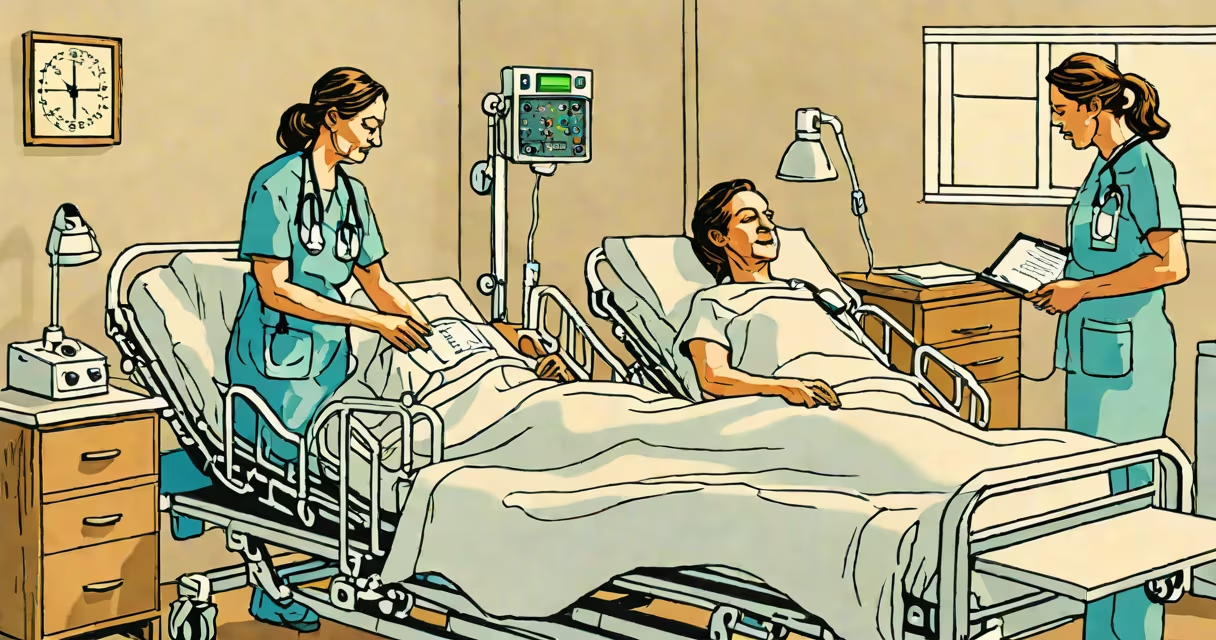
An acute medical unit (AMU) is a hospital department providing short-term care for patients recovering from serious illness, injury, or surgery who don't require intensive care. These units act as a bridge between intensive care units (ICUs) and general wards.
AMUs typically handle patients for 24-72 hours while their condition stabilizes. Staff monitor important signs, administer medications, and perform basic treatments. Unlike ICUs, AMUs don't provide continuous one-on-one nursing care, though they do offer more frequent monitoring than general wards.
For example, a patient recovering from heart attack treatment might spend a day in the ICU, then transfer to an AMU for another day or two before moving to a general ward. This stepped approach allows hospitals to allocate resources efficiently while still providing appropriate care levels.
| Unit Type | Primary Purpose | Typical Patient Stay |
|---|---|---|
| Step-down units | Transition ward | 1-3 days |
| Medical observation units | Short-term monitoring for undifferentiated patients | 6-24 hours |
| Recovery units | Post-surgical monitoring | 1-2 days |
Many people confuse acute medical units with other hospital departments. Unlike intensive care units, AMUs don't provide continuous one-on-one nursing care. They also differ from emergency departments, which focus on immediate treatment rather than stabilization and recovery.
One common misconception is that AMUs are primarily for elderly patients. While they do serve many older adults, these units care for patients of all ages recovering from various conditions, including infections, injuries, and postoperative recovery.
When my father underwent heart surgery, he spent his first night in the ICU. The next morning, doctors moved him to the hospital's acute medical unit. There, nurses checked his important signs every two hours and administered IV medications. After 48 hours, his condition had stabilized enough to move to a general ward.
According to the American Hospital Association, AMUs help reduce hospital readmission rates by ensuring patients are stable before moving to less-intensive care areas. They also free up ICU beds for patients who need continuous critical care.
Research published in the Journal of Hospital Medicine shows that well-run AMUs can reduce hospital lengths of stay by an average of 1.2 days per patient. This efficiency helps lower healthcare costs while improving patient outcomes.