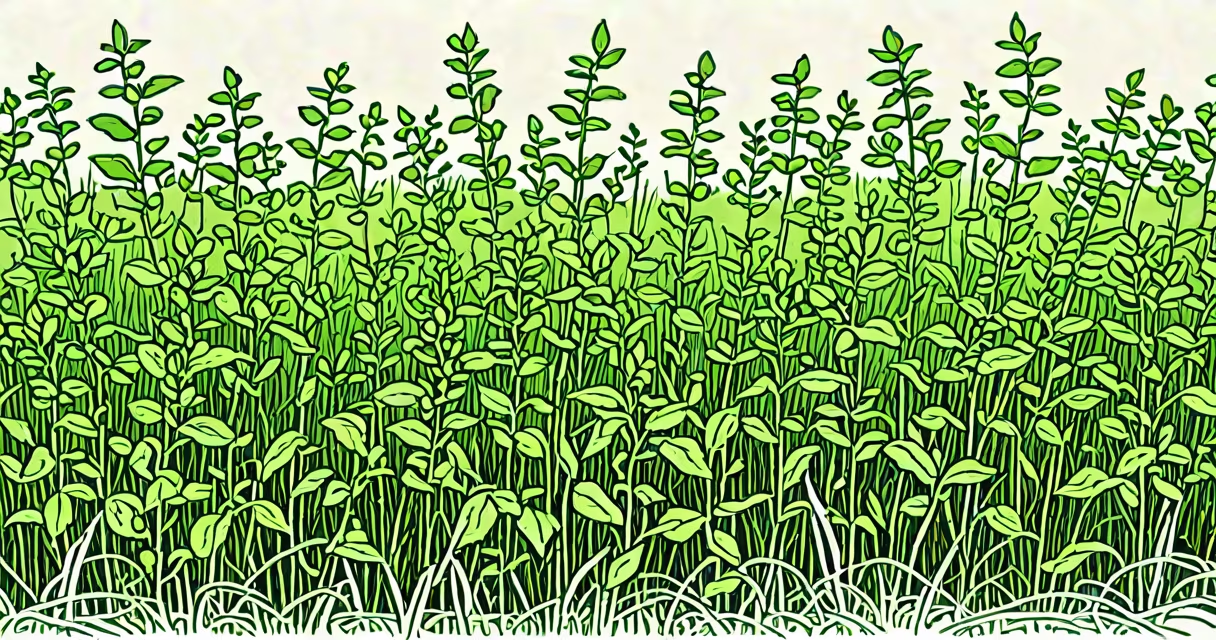
Alfalfa is a high-protein forage crop from the legume family, prized for livestock feed and human nutrition.
Alfalfa grows in clumps with deep roots that reach water and nutrients. It fixes nitrogen in soil through bacteria on its roots. This makes soil healthier for other plants.
Alfalfa comes in varieties like Vernal and Cimarron, adapted to different climates. Farmers grow it for hay, silage, or grazing. People also eat alfalfa sprouts in salads or take it as a supplement.
Some think alfalfa is just another grass. But unlike grasses, alfalfa is a legume, like peas or beans. It has compound leaves with three leaflets and small purple flowers.
Another mistake is assuming alfalfa is only for cows. While it's a top livestock feed, people have eaten it for centuries. Traditional Chinese medicine used alfalfa to treat conditions like arthritis.
Alfalfa is packed with protein, fiber, vitamins A, C, E, and K, plus minerals like calcium and iron. A cup of raw alfalfa sprouts has only 16 calories but provides 2 grams of protein and 3 grams of fiber.
I tried alfalfa sprouts in a salad last week. They added a fresh, slightly sweet crunch. The sprouts blended well with tomatoes, cucumbers, and a light vinaigrette.
People often mix up alfalfa with clover or vetch. Clover has round flower heads, while alfalfa forms spike-like clusters. Vetch has tendrils for climbing, unlike alfalfa's upright growth.
Alfalfa improves soil health, supports livestock, and offers human health benefits. Its deep roots prevent erosion, and its nitrogen-fixing ability reduces the need for synthetic fertilizers.
For humans, alfalfa provides essential nutrients. Studies suggest it may help lower cholesterol and support digestion. However, pregnant women should avoid alfalfa supplements due to potential risks.
Next time you see alfalfa, remember it's more than just cow food. It's a versatile plant with benefits for soil, animals, and people.