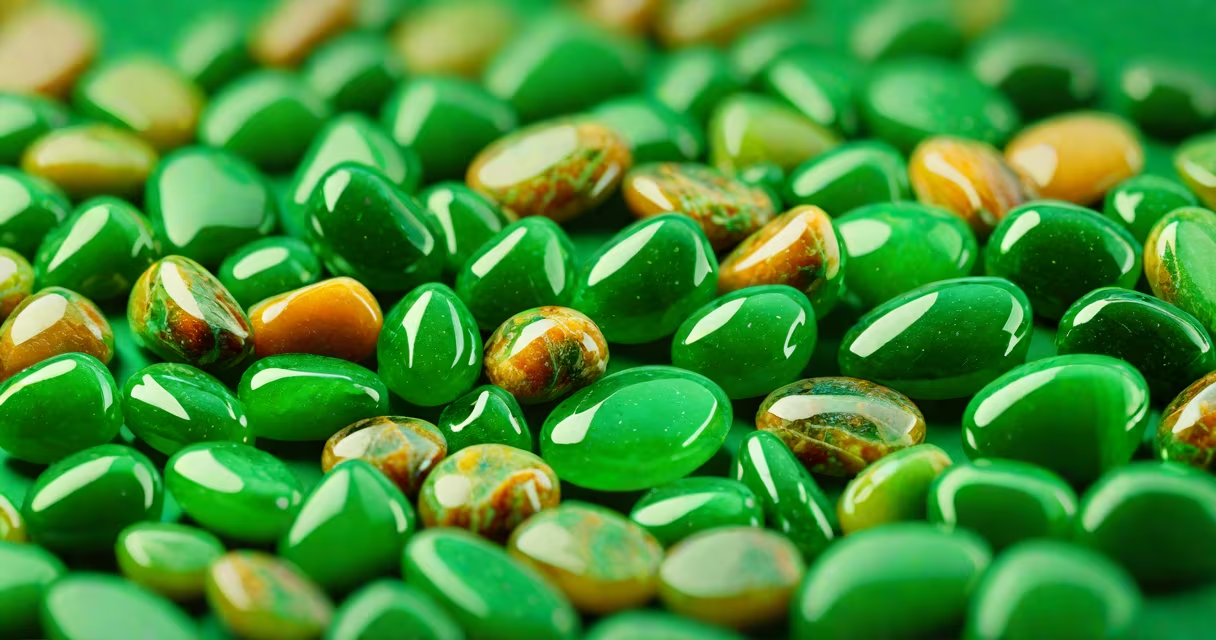
Aventurine is a translucent form of quartz known for its shimmering green color and association with luck and prosperity. It gets its name from the Italian word "a ventura," meaning "by chance," reflecting its discovery of the stone in Italy in the 18th century.
Aventurine is believed to work through its vibrational energy, interacting with the body's energy field to promote balance and well-being. Its green color is due to the presence of fuchsite, a mica mineral, which creates the stone's characteristic shimmer. This effect is known as aventurescence.
The stone is often used in crystal healing practices, where it is placed on specific areas of the body or held during meditation to channel its purported benefits. Some practitioners believe aventurine can amplify the effects of other crystals when used together.
Aventurine comes in several colors, each with its own set of properties:
| Color | Properties |
|---|---|
| Green | Most common; associated with luck, prosperity, and heart chakra healing |
| Blue | Linked to communication and throat chakra balancing |
| Red | Believed to improve vitality and stimulate the root chakra |
| Yellow | Associated with personal power and solar plexus chakra activation |
Aventurine is widely used in jewelry, such as bracelets, necklaces, and rings, allowing wearers to benefit from its properties throughout the day. It is also used in home decor, such as in the form of carved figurines or polished stones placed in specific areas of the home to attract positive energy.
In meditation, aventurine is often held in the hand or placed on the body to focus energy and intention. Some practitioners use aventurine in grid layouts with other crystals to create a harmonious energy field.
One common misconception is that aventurine is always green. While green aventurine is the most well-known variety, the stone can also be found in blue, red, and yellow hues, each with its own unique properties.
Another myth is that aventurine can bring instant wealth. While it is associated with prosperity, its effects are believed to be gradual and require consistent use and intention setting. It is not a magical solution for financial success but rather a tool for attracting opportunities and maintaining a positive mindset.
Lastly, some people believe that aventurine can only be used for luck and prosperity. In reality, its uses are much broader, including emotional healing, stress relief, and enhancing creativity.
From a scientific standpoint, aventurine is a form of quartz with inclusions of fuchsite, which gives it its characteristic shimmer. The stone itself has no proven therapeutic properties, and any benefits attributed to it are based on anecdotal evidence and belief systems.
The placebo effect may play a role in the perceived benefits of aventurine. When individuals believe in the stone's properties, they may experience a sense of well-being or improved focus, even if the stone itself has no inherent power.
I once used a piece of green aventurine during a period of high stress. I placed it on my desk and held it during meditation. While I cannot attribute any direct cause-and-effect relationship, I did notice a slight improvement in my ability to stay calm and focused during challenging tasks. Whether this was due to the stone's properties or simply the act of mindfulness is unclear, but the experience was nonetheless positive.