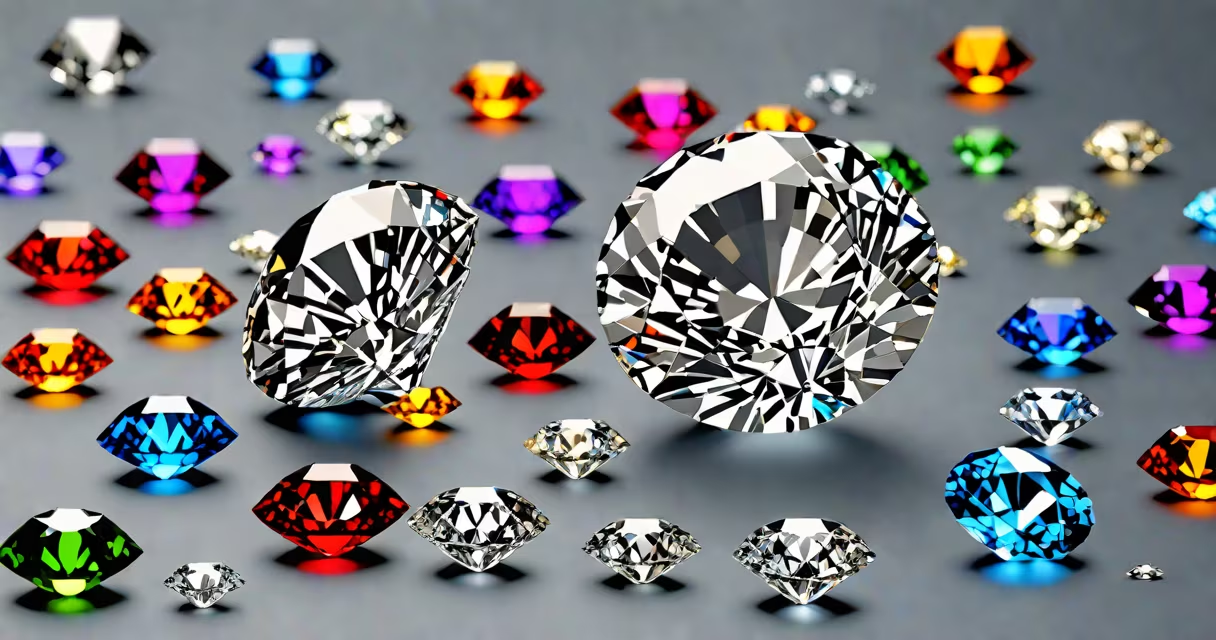
Diamond color refers to a gem's lack of color, graded on a scale from D (colorless) to Z (light yellow). Jewelers measure whiteness because subtle tones affect a diamond's brilliance and value.
The GIA color grading system compares diamonds to master stones under controlled lighting. Graders place stones upside-down against a pure white surface to neutralize tint perception. This method reveals even faint yellow or brown hues.
| Grade | Appearance | Price Impact |
|---|---|---|
| D-F | Colorless | Premium prices |
| G-H | Near-colorless | Excellent value |
| I-J | Slight tint | Budget-friendly |
| K-M | Noticeable yellow | Lower cost |
| N-Z | Light yellow | Discounted prices |
Color becomes more visible in larger stones. A 1-carat diamond shows more hue than a 0.5-carat stone of the same grade. Fancy-shaped diamonds (like ovals) also reveal color differently than round brilliants. I noticed this firsthand when comparing a 1.5-carat cushion-cut H diamond to a round G diamond of the same size-the cushion showed more warmth.
Fluorescence can mask tint. About 30% of diamonds fluoresce blue under UV light, which can make lower-color grades appear whiter. However, strong fluorescence in high-color diamonds sometimes creates a milky appearance.
Many assume all diamonds are colorless, but only about 1% achieve D color grade. Others confuse color with clarity-these are separate grading categories. A diamond with visible inclusions may still be colorless, while a flawless stone might show noticeable tint.
Another mistake is assuming fancy yellow diamonds follow the same scale. They use a different fancy color grading system that evaluates saturation and hue intensity.
When shopping for diamonds, ask retailers to show you the same stone under different lighting conditions. Natural sunlight often reveals color more accurately than store lighting. For online shoppers, look for videos demonstrating how the diamond appears in various environments.
Remember that color interacts with other diamond characteristics. A slightly lower color grade might look similar to a higher grade when set in yellow gold, where the metal's warmth masks faint tint. This is why many jewelers recommend considering the setting metal when choosing color grade.