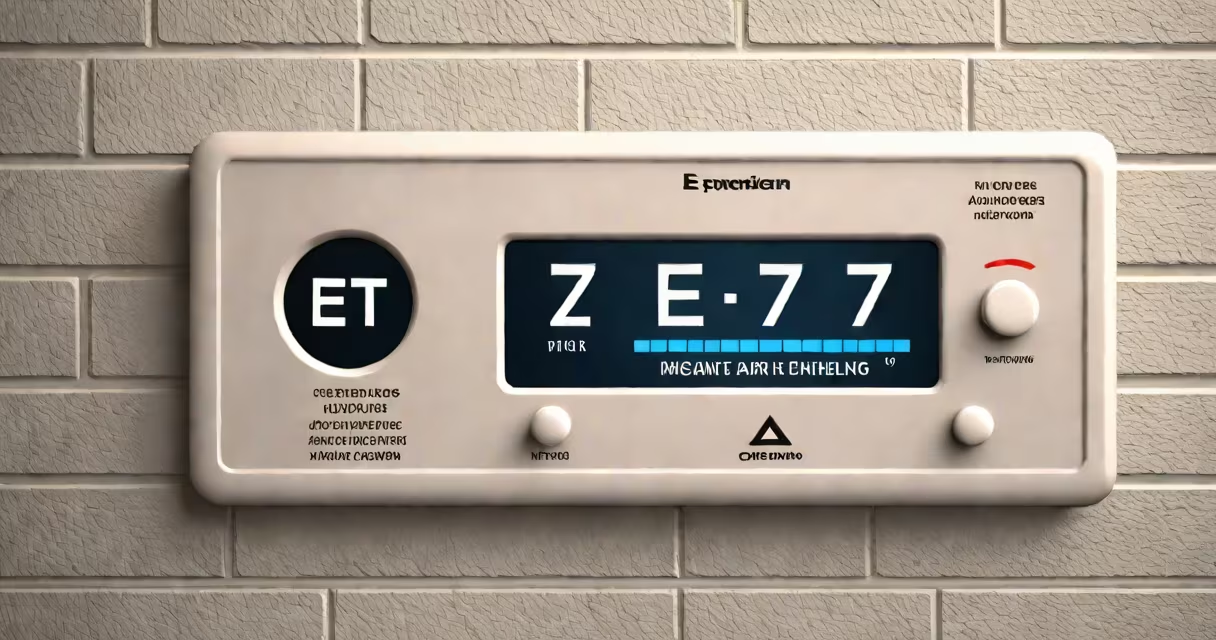
A mini split E7 error indicates a refrigerant-related problem, typically low refrigerant levels or a refrigerant leak. This code appears when the system detects abnormal pressure readings in the refrigerant lines.
How Mini Split Error Codes Work
Mini split systems use error codes to alert users to specific issues. These codes appear on the indoor unit's display panel. The E7 code specifically relates to the refrigerant circuit, which includes the compressor, condenser, evaporator, and refrigerant lines. When the system detects pressure outside the normal operating range, it triggers the E7 error.
Common Causes of the E7 Error
The E7 error can stem from several issues:
Low refrigerant levels: Refrigerant leaks are the most common cause. Even a small leak can reduce efficiency and trigger the error.
Blocked or restricted refrigerant lines: Dirt, debris, or physical damage can restrict refrigerant flow.
Faulty components: Issues with the compressor, expansion valve, or other parts can disrupt refrigerant circulation.
How to Diagnose the E7 Error
Diagnosing the E7 error requires checking the refrigerant system. Here's a step-by-step process:
Check the display: Confirm the E7 error is active. Reset the system by turning it off and on again to see if the error persists.
Inspect for leaks: Look for oil stains around refrigerant lines, which indicate leaks. Use a leak detector or soapy water to identify leaks.
Measure refrigerant levels: A professional HVAC technician can measure refrigerant levels using manifold gauges.
Test system components: Check the compressor, expansion valve, and other parts for proper operation.
For example, if you notice hissing sounds near the outdoor unit or see ice forming on the refrigerant lines, these are signs of a refrigerant leak. Addressing these issues promptly can prevent further damage to the system.
How to Fix the E7 Error
Fixing the E7 error often requires professional help. Here are the steps a technician might take:
Locate and repair leaks: Seal any leaks in the refrigerant lines. This may involve soldering, brazing, or replacing damaged sections.
Recharge the refrigerant: After repairing leaks, recharge the system with the correct type and amount of refrigerant.
Replace faulty components: If the compressor or other components are damaged, replace them.
Test the system: Run the system to ensure the E7 error no longer appears and that it operates efficiently.
For instance, if the technician finds a leak in the refrigerant line, they'll repair it and then recharge the system with the appropriate refrigerant. Testing ensures the system runs smoothly afterward.
Many homeowners confuse the E7 error with other HVAC issues, such as electrical problems or airflow restrictions. However, the E7 error specifically points to refrigerant-related problems. If you're unsure, consult an HVAC professional for accurate diagnosis and repair.