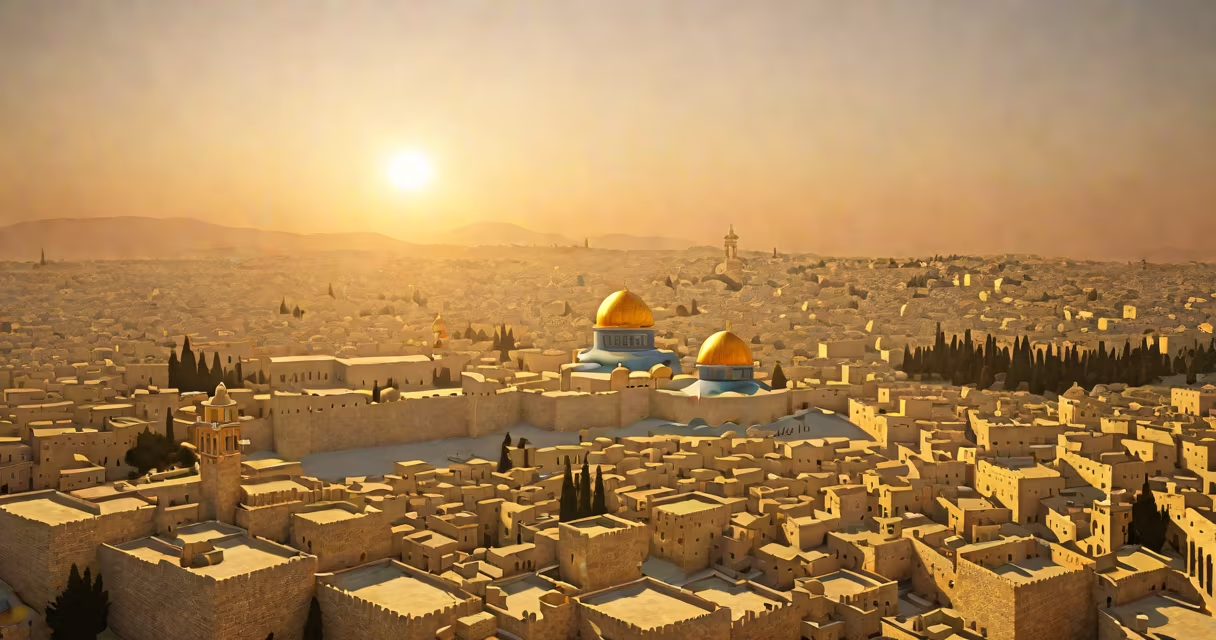
The East in the Bible represents the direction of the rising sun, symbolizing new beginnings, divine presence, and spiritual restoration. This cardinal direction appears throughout scripture as a marker of God's intervention and promise.
The East serves as both a literal and symbolic orientation in biblical stories. In Genesis, Eden is placed "in the East" (Genesis 2:8), establishing it as a place of divine origin. The direction also signifies the path of exile for Adam and Eve after the Fall, contrasting their expulsion with the sacred origins of creation.
Prophets like Ezekiel use the East to describe visions of divine glory. In Ezekiel 43:2, "the glory of the God of Israel was coming from the way of the East," emphasizing the East as the source of God's presence and return.
| Symbolic Meaning | Biblical Example |
|---|---|
| New Beginnings | Genesis 3:24 - "He drove out the man; and he placed at the east of the garden of Eden Cherubims, and a flaming sword which turned every way, to keep the way of the tree of life." |
| Divine Presence | Ezekiel 43:2 - "the glory of the God of Israel was coming from the way of the East." |
| Restoration | Isaiah 43:5 - "Fear not: for I am with thee: I will bring thy seed from the east, and gather thee from the west." |
The East appears in contexts of exile, return, and divine encounters. In the Exodus, the Israelites journeyed toward the Promised Land from the East, symbolizing their movement toward God's provision. The direction also marks the location of significant events, such as the placement of the Tabernacle's entrance (Exodus 27:13-15).
One non-obvious fact is that the East often contrasts with the West in biblical symbolism. While the East represents divine presence and restoration, the West can signify judgment or distance from God. This duality highlights the East's role as a direction of hope and renewal.
Some readers confuse the East's symbolic meaning with mere geographical direction. However, the East in the Bible is deeply tied to theological themes of redemption and divine encounter, not just physical location.
Another mistake is assuming the East always represents positive outcomes. While it often signifies hope, it can also denote exile, as seen in Genesis 3:24, where cherubim guard the East of Eden after the Fall.
Consider Ezekiel's vision in Ezekiel 47. The prophet describes a river flowing from the Temple toward the East, bringing life to the Dead Sea. This imagery underscores the East as a source of divine life and restoration, transforming desolation into abundance.
I once visited the ruins of ancient Jerusalem and noticed how the Temple Mount aligns with the East. Standing there at sunrise, the symbolism of the East as a direction of divine encounter became vividly clear.