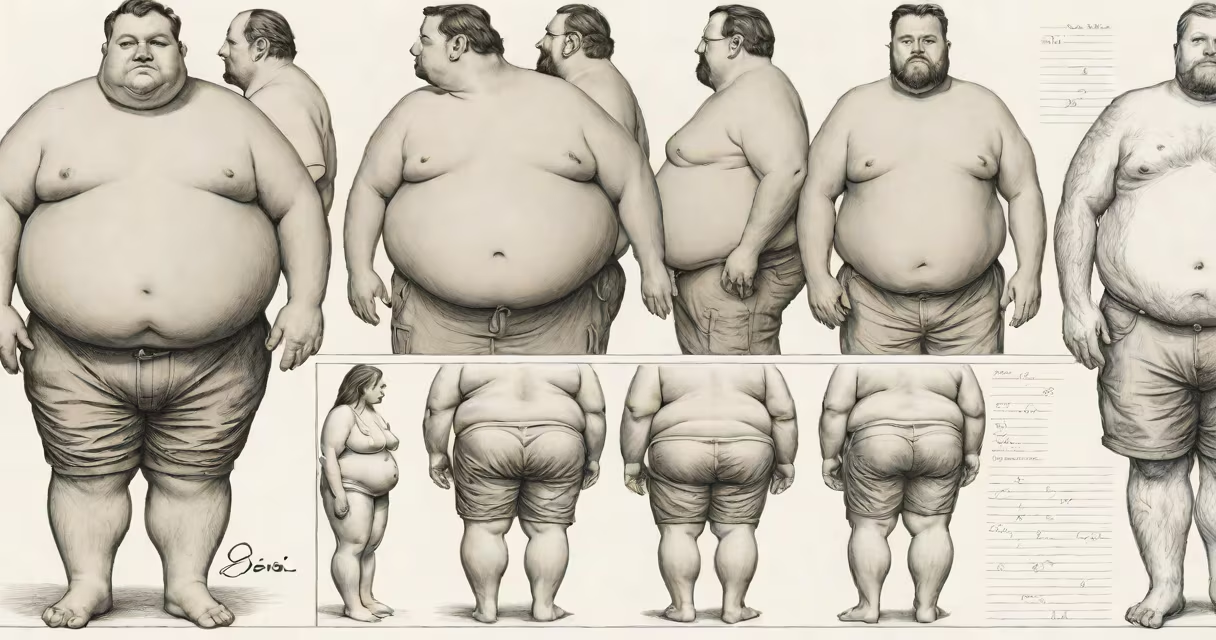
Obese describes a person with a body mass index (BMI) of 30 or higher, indicating significant excess body fat. This classification is based on height-to-weight ratios established by the Centers for Disease Control and Prevention (CDC) and World Health Organization (WHO).
BMI calculates obesity using a simple formula: weight in kilograms divided by height in meters squared (kg/m²). For example, a person who is 5 feet 9 inches tall and weighs 203 pounds has a BMI of 30, placing them in the obese category.
| BMI Range | Classification |
|---|---|
| Under 18.5 | Underweight |
| 18.5 - 24.9 | Healthy Weight |
| 25.0 - 29.9 | Overweight |
| 30.0 and above | Obese (Class I) |
| 35.0 - 39.9 | Obese (Class II) |
| 40.0 and above | Obese (Class III) |
Many confuse obesity with being overweight (BMI 25-29.9) or assume muscle mass alone can cause high BMI. However, obesity specifically refers to excessive fat accumulation, which increases health risks like heart disease and diabetes.
Visual representations of obesity often show individuals with significant abdominal fat, though distribution varies. For instance, an apple-shaped body (fat around the midsection) poses higher risks than a pear shape (fat around hips and thighs).
During a community health fair, I observed a BMI screening station. Participants with BMIs over 30 often displayed visible signs of obesity, such as large waist circumferences, reinforcing the importance of regular health check-ups.