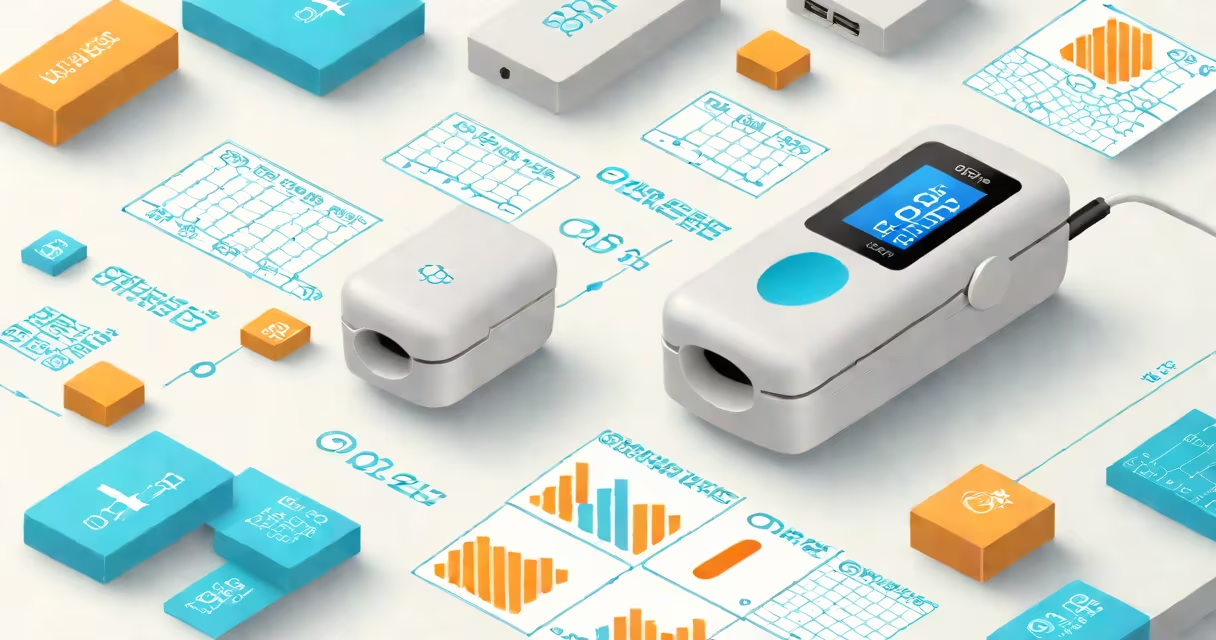
Oxygen saturation (O2 sat) measures how much oxygen your red blood cells carry compared to their maximum capacity. This metric, expressed as a percentage (SpO2), evaluates your respiratory and circulatory efficiency.
Your blood absorbs oxygen from your lungs and transports it throughout your body. Hemoglobin, a protein in red blood cells, binds with oxygen molecules. A healthy person's hemoglobin is typically 95-100% saturated with oxygen.
Pulse oximeters use light absorption to estimate SpO2. The device clips onto your finger, sending two wavelengths of light through the tissue. Oxygenated and deoxygenated blood absorb light differently, allowing the oximeter to calculate SpO2.
| Type | Description | Typical Range |
|---|---|---|
| Arterial Blood Gas (ABG) | Direct measurement via blood sample from an artery | 95-100% |
| Pulse Oximetry (SpO2) | Non-invasive measurement using a pulse oximeter | 95-100% |
| Venous Blood Gas (SvO2) | Measures oxygen in venous blood (less common) | 60-80% |
Low oxygen saturation (below 90%) may indicate respiratory conditions like chronic obstructive pulmonary disease (COPD), pneumonia, or asthma. Athletes monitor SpO2 to assess performance at high altitudes, where oxygen levels drop.
During the COVID-19 pandemic, home pulse oximeters became essential for tracking respiratory decline. The U.S. Food and Drug Administration (FDA) issued guidance on their use for remote patient monitoring.
I once tested a pulse oximeter on myself at 8,000 feet elevation. My SpO2 dropped to 89%, highlighting how altitude affects oxygen absorption. After descending, my reading returned to 98% within minutes.
Chronic lung disease patients should check SpO2 daily. Athletes training at high elevations use oximeters to track performance. During sleep studies, doctors monitor SpO2 to diagnose sleep apnea.
If your SpO2 falls below 90% unexpectedly, seek medical attention. Persistent low readings may require supplemental oxygen therapy.