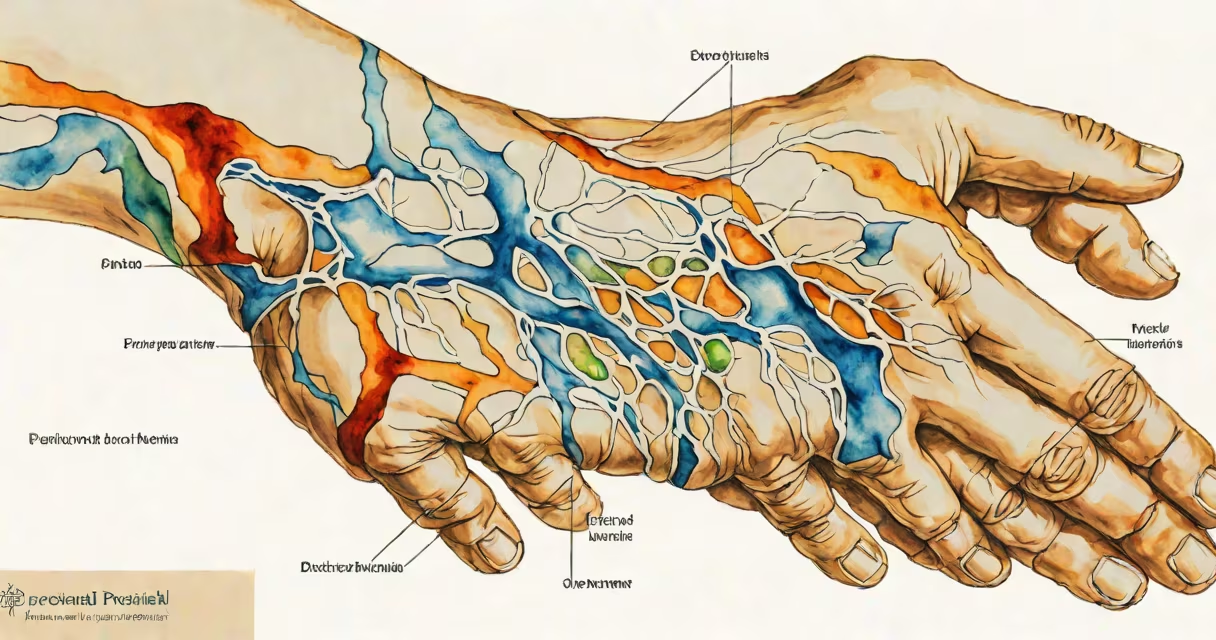
Proximal means nearest or closest in space or time. The term originates from Latin "proximus" (nearest) and contrasts with "distal" (farthest).
Proximity describes relative position. In anatomy, proximal refers to body parts closer to the trunk (e.g., the thigh is proximal to the knee). Linguistically, proximal terms indicate closeness (e.g., "this" vs. "that").
| Domain | Proximal Example | Distal Example |
|---|---|---|
| Anatomy | Upper arm (proximal to elbow) | Forearm (distal to elbow) |
| Linguistics | "This book" | "That book" |
| Psychology | Immediate surroundings | Distant locations |
People often confuse proximal with "proximate," which means immediate or direct. While related, they serve different contexts. For example, in grammar, proximal demonstratives ("this/these") differ from distal ones ("that/those").
Understanding proximity helps in medical terminology, spatial reasoning, and clear communication. In anatomy, knowing proximal/distal relationships aids in describing injuries or surgical sites accurately. Linguistically, proximal terms create immediacy in writing.
When I studied anatomy, memorizing "proximal" as "near the middle" helped me locate body parts correctly during dissections. For instance, identifying the proximal phalanx (closest to the hand) versus the distal phalanx (farthest, at the fingertip) was important for accurate labeling.
Proximal contrasts with distal but interacts with other spatial terms. In linguistics, it pairs with demonstratives like "here" versus "there." Psychologically, proximal stimuli receive more attention than distal ones due to their immediacy.