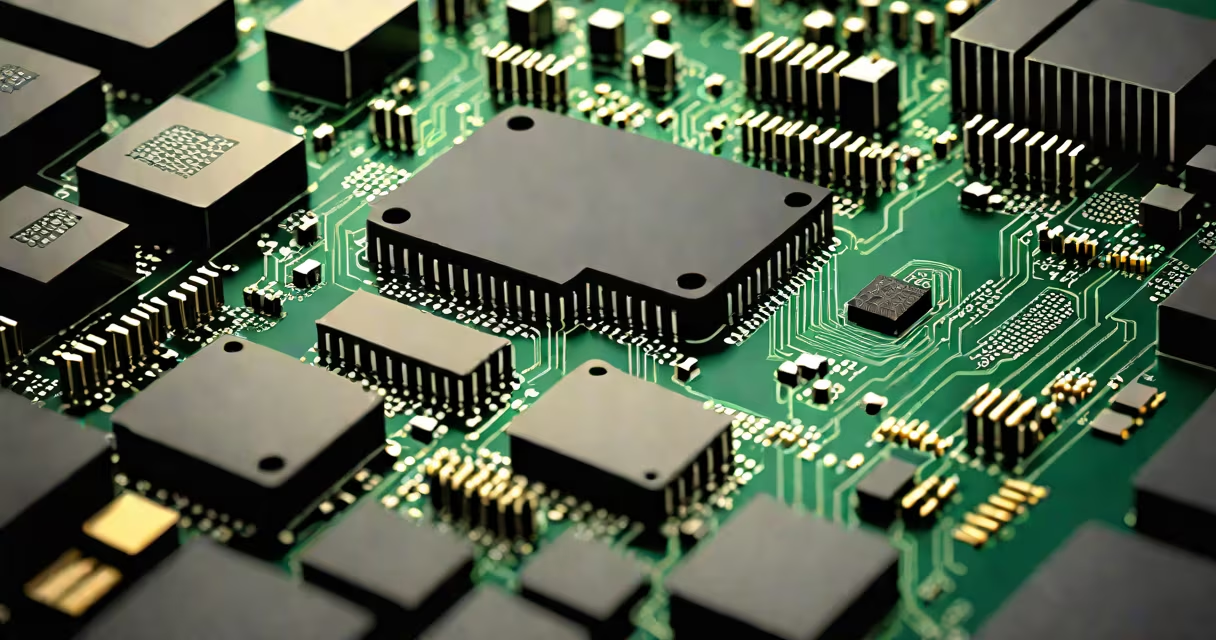
ROM stands for "read-only memory," a type of non-volatile storage in computers and other devices that retains data even when powered off.
Unlike RAM (random access memory), which loses data when power is lost, ROM maintains permanent or semi-permanent data. This makes it ideal for storing firmware, the low-level software that controls hardware components during boot-up and operation.
When a device powers on, it runs instructions stored in ROM to initialize hardware and load the operating system. This process happens before the system accesses any other storage, making ROM important for basic functionality.
| Type | Description | Example Use Case |
|---|---|---|
| MROM (Masked ROM) | Manufactured with programmed data that cannot be changed | Calculators, embedded systems |
| PROM (Programmable ROM) | Can be programmed by users with a special device | Custom hardware development |
| EPROM (Erasable PROM) | Can be erased with UV light and reprogrammed | Prototyping and testing |
| EEPROM (Electrically Erasable PROM) | Can be erased and reprogrammed electrically | BIOS chips, flash drives |
| Flash Memory | A type of EEPROM that can be erased and rewritten in blocks | USB drives, SSDs, memory cards |
Many people confuse ROM with RAM, assuming they serve similar functions. However, RAM is volatile and temporary, while ROM is non-volatile and permanent. Another mistake is thinking ROM can be easily modified like a hard drive. Most ROM types are either unchangeable or require specialized tools to alter.
For example, the BIOS (Basic Input/Output System) on older computers was stored in ROM. While modern systems use EEPROM for BIOS, allowing updates, the original BIOS was hard-coded and unchangeable without replacing the chip.
ROM is essential for device boot-up and basic operations. Without it, a computer wouldn't know how to start up or communicate with its hardware components. For instance, when you turn on a computer, the CPU first looks to the ROM for instructions on initializing hardware and loading the operating system from storage.
In my experience working with embedded systems, I've seen how critical ROM is for stability. A corrupted ROM can render a device unusable, as it lacks the basic instructions needed to function. This is why manufacturers often use MROM for devices that don't require updates, ensuring the firmware remains intact.
While ROM is non-volatile and permanent, other storage types like RAM and hard drives serve different purposes. RAM provides temporary, high-speed storage for active processes, while hard drives offer large-capacity, long-term storage for data and applications.
ROM, or read-only memory, plays a important role in computing by providing permanent storage for firmware and boot-up instructions. Understanding its types and functions helps clarify its importance in device operation and design.