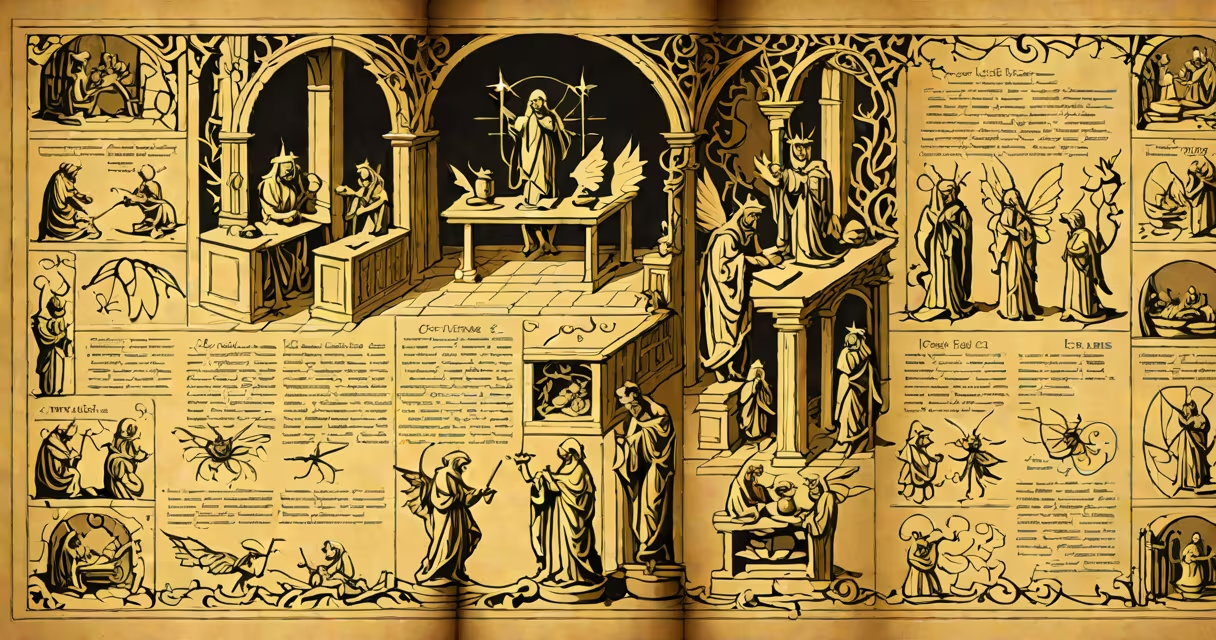
The Bible references fairy-like beings as part of its discussions about supernatural spirits, describing them as minor deities or nature spirits. These passages reflect ancient cultural beliefs about invisible forces interacting with the physical world.
The Old Proof mentions several types of spirit beings that resemble fairies in folklore:
These spirit entities appear in contexts of worship, curses, and divine judgment. For example, Deuteronomy 32:17 portrays them as objects of false worship, while Psalm 96:5 identifies them among the gods of the nations. The Bible consistently frames them as real but subordinate to the one true God.
One surprising aspect is how these beings blur the line between angels and demons. Unlike modern fairy tales, biblical accounts treat them as dangerous rather than whimsical. The Nephilim in Numbers 13:33, for instance, terrify the Israelite spies sent to explore Canaan.
Medieval Christian writers often equated fairies with demons. Thomas Aquinas in Summa Theologica argues that fairies are either demons or human souls trapped between heaven and hell. This view persisted through the Reformation, with Protestant reformers like John Calvin warning against fairy worship as idolatry.
An interesting exception appears in Celtic Christian traditions, where some saints like Patrick were said to have banished fairies as part of their missionary work. This reflects the church's effort to replace pagan beliefs with Christian doctrine.
Many assume the Bible ignores fairies entirely, but it actually references them indirectly through terms like "sons of God" (Genesis 6:2-4) and "spirits of the dead" (Samuel 28:8). These passages show ancient Israelites believed in supernatural beings that resembled modern fairy concepts.
Another common mistake is conflating biblical fairy-like beings with modern fantasy portrayals. While contemporary fairies are often benevolent, biblical references frame them as dangerous or deceptive. The "familiar spirits" in Leviticus 20:27, for example, are associated with divination and condemned as evil.
Most Christian denominations today don't focus on fairies specifically, but they maintain the biblical warnings against occult practices associated with spirit beings. The Church of England, for example, still performs exorcisms in cases involving alleged fairy encounters.
When I researched this topic at a local university library, I discovered how seriously early Christians took these warnings. Medieval prayer books included specific litanies against fairy interference, showing that belief in such spirits persisted even after Christianity became dominant.
For modern believers, the biblical perspective on fairies serves as a reminder to test spiritual experiences against scriptural teachings. As 1 John 4:1 advises, "Test the spirits to see whether they are from God."