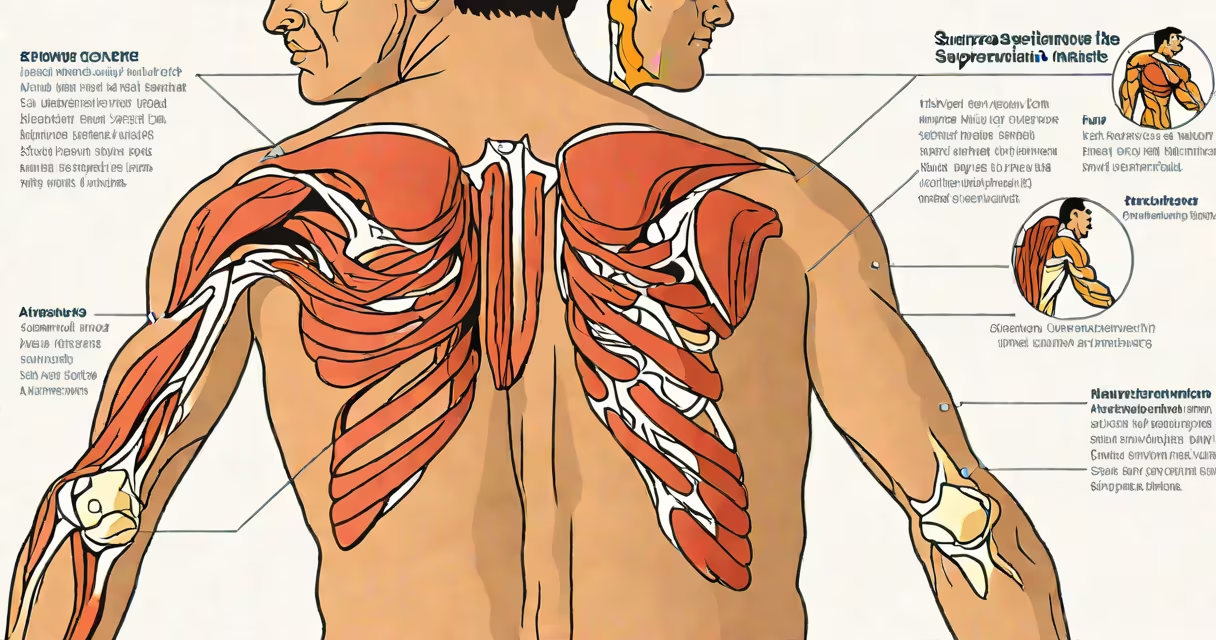
The supraspinatus muscle initiates arm abduction (raising your arm to the side) and stabilizes the shoulder joint, playing a critical role in rotator cuff function.
The supraspinatus is one of four rotator cuff muscles that support the shoulder joint. It originates from the supraspinous fossa of the scapula and inserts on the greater tubercle of the humerus. When contracted, it pulls the humerus upward, starting the first 15 degrees of arm abduction against gravity.
Many people confuse the supraspinatus with other shoulder muscles. Unlike the deltoid (which primarily lifts the arm after the initial 15 degrees), the supraspinatus works with the deltoid to initiate and control this movement. It's also often mistaken for the infraspinatus, another rotator cuff muscle that primarily rotates the shoulder.
Supraspinatus tendinitis and tears are common injuries, often caused by repetitive overhead motions or shoulder impingement. Symptoms include shoulder pain, weakness, and difficulty raising the arm. Treatment ranges from rest and physical therapy to surgery in severe cases.
I once treated a patient with chronic shoulder pain who thought their issue was due to aging. After diagnosing supraspinatus tendinitis, targeted physical therapy resolved their symptoms within six weeks.