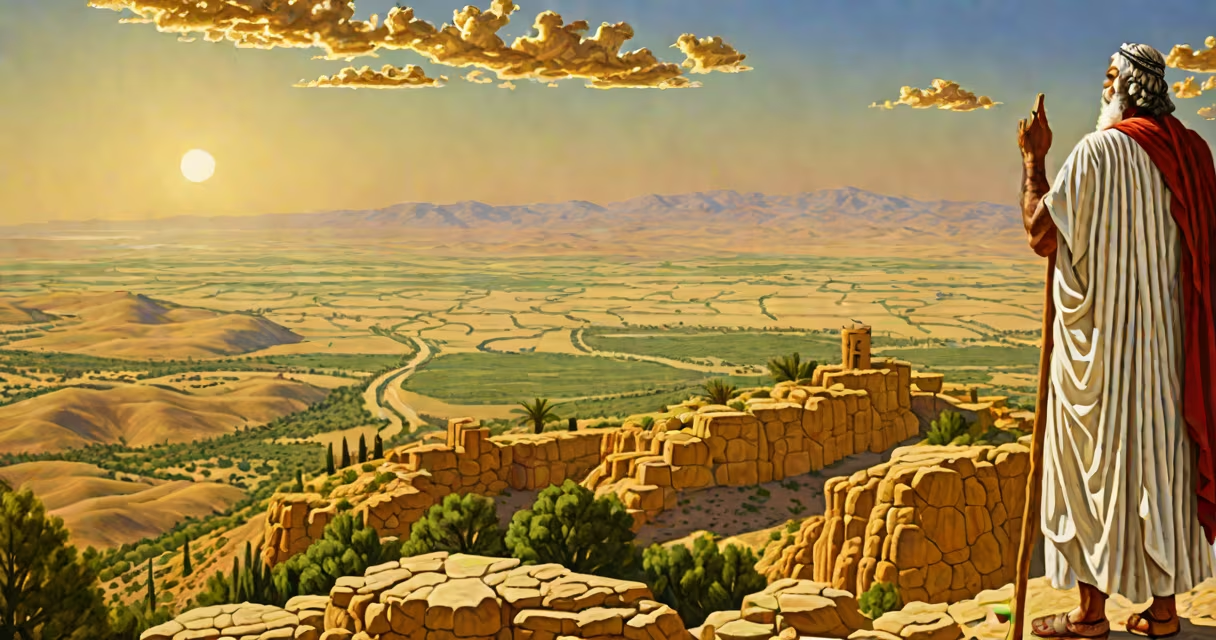
Moses died on Mount Nebo after leading the Israelites out of Egypt and through the wilderness for 40 years. This event marked the end of his leadership and the transition to Joshua.
According to Deuteronomy 34:5-6, Moses died at the age of 120 on Mount Nebo, overlooking the Promised Land of Canaan. The Bible states that he died "by the mouth of the Lord," suggesting divine intervention in his death. His body was buried in an unmarked grave, and no one knows the exact location, preventing it from becoming a shrine.
Moses was barred from entering Canaan because of an incident at Meribah. In Numbers 20:10-12, Moses struck a rock with his staff twice to produce water, rather than speaking to the rock as God had commanded. This act of disobedience and lack of faith resulted in God's judgment that Moses would not enter the Promised Land.
Before his death, Moses commissioned Joshua as his successor. In Deuteronomy 31:7-8, Moses gathered the people and publicly transferred authority to Joshua, who then led the Israelites into Canaan. This transition ensured continuity of leadership and maintained the momentum of the Israelites' process.
Moses is remembered as one of the most significant leaders in the Bible. He received the Ten Commandments from God on Mount Sinai, established the covenant between God and Israel, and laid the foundation for the Israelite nation. His life and leadership continue to inspire religious and cultural traditions.