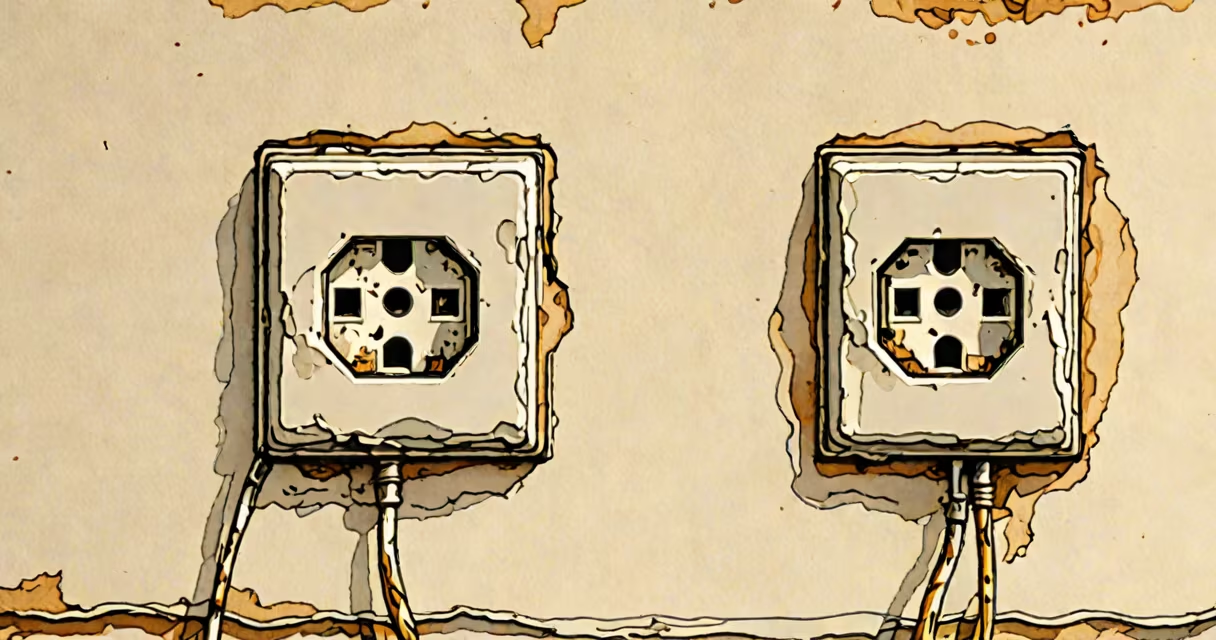
A ground wire is missing in an ungrounded outlet, leaving only two slots: a hot slot (smaller) and a neutral slot (larger). These outlets lack the third grounding slot found in grounded outlets.
Ungrounded outlets connect to a circuit's hot and neutral wires but omit the ground wire. This design dates back to older homes built before grounding became standard. The absence of a ground wire means there's no direct path for stray electricity to safely travel to the earth.
Ungrounded outlets come in two common types:
Ungrounded outlets are most common in older homes built before the 1960s, when grounding wasn't required. They're also found in some newer constructions where wiring was improperly installed. While they function for basic appliances, they pose significant safety risks.
Many people assume that a three-prong outlet is always grounded. However, some homes have three-prong outlets wired without a ground wire, creating a false sense of security. Others believe that double-insulated appliances eliminate the need for grounding, but this isn't always true-double insulation reduces but doesn't eliminate risks.
I once worked in an older home where the three-prong outlets weren't grounded. After testing with a circuit analyzer, we discovered the outlets weren't properly grounded. We recommended installing GFCIs and rewiring critical areas to ensure safety.