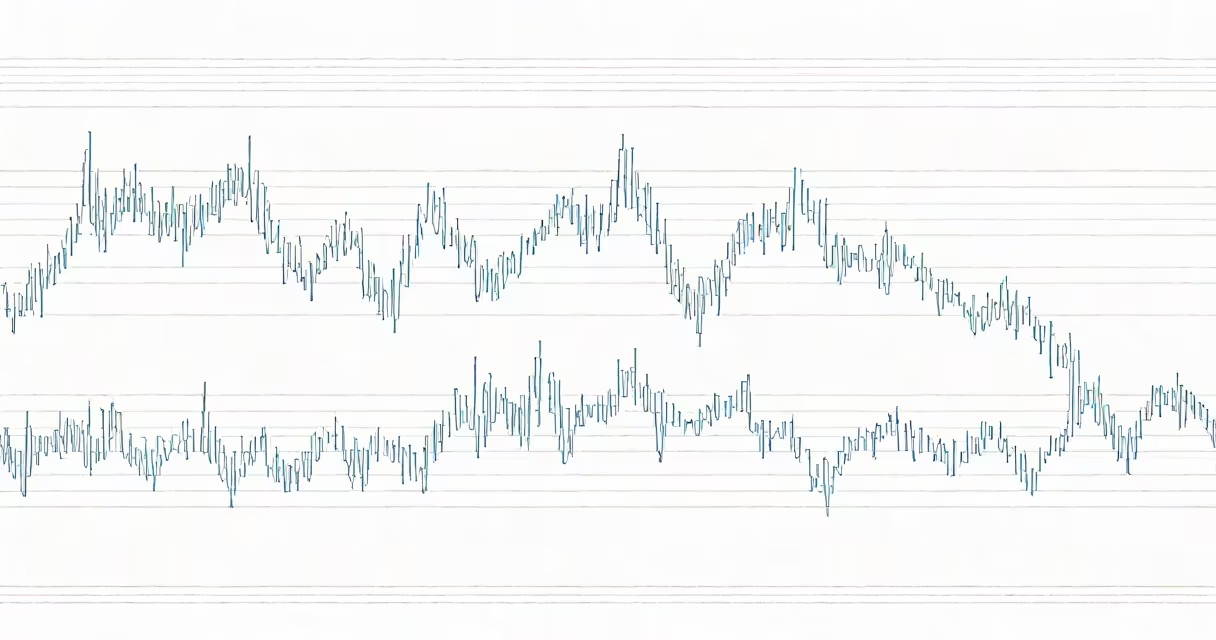
Heart rate variability (HRV) measures the time intervals between consecutive heartbeats, revealing how your autonomic nervous system balances stress and recovery. Unlike heart rate, which counts beats per minute, HRV tracks the variation in those intervals.
Your heart doesn't beat like a metronome-it speeds up and slows down constantly. HRV quantifies these fluctuations. A higher HRV typically indicates better cardiovascular fitness and resilience to stress, while lower HRV may signal fatigue or illness.
Researchers and clinicians measure HRV in several ways:
| Type | Description | Common Uses |
|---|---|---|
| Time Domain | Measures intervals between beats over time | General health assessments |
| Frequency Domain | Analyzes rhythmic cycles in HRV using mathematical transformations | Stress and fatigue monitoring |
| Nonlinear Analysis | Studies complex patterns in HRV data | Advanced research |
HRV appears in clinical settings, fitness tracking, and research. Doctors use it to assess cardiovascular health and predict risks. Athletes monitor HRV to improve training loads and recovery. Even consumer wearables now include HRV tracking.
HRV reflects your body's ability to adapt to stressors. High HRV suggests good flexibility, while low HRV may indicate overtraining or chronic stress. The American Heart Association notes that HRV analysis provides valuable insights into autonomic nervous system function.
Many people confuse HRV with heart rate. While related, they measure different things. Heart rate counts beats per minute, while HRV measures the variation in time between beats. A high heart rate doesn't necessarily mean low HRV, and vice versa.
For example, an athlete might have a resting heart rate of 40 bpm but high HRV, indicating excellent cardiovascular fitness. Conversely, someone with a resting heart rate of 60 bpm might have low HRV due to stress or poor fitness.
Specialized devices track HRV through photoplethysmography (PPG) sensors. These measure subtle changes in blood flow. Consumer wearables like smartwatches often include HRV tracking features.
I tested several HRV-tracking devices last year. The most accurate results came from chest-strap monitors, which attach to the ribcage near the heart. Wrist-based wearables showed more variability in their readings.
Consider an endurance runner preparing for a marathon. By tracking HRV daily, they notice values drop after intense workouts. This signals the need for recovery. After several rest days, HRV returns to baseline, indicating readiness for harder training.
This approach helps athletes balance training load with recovery, reducing injury risk. Research published in the journal Sports Medicine confirms HRV as a useful tool for monitoring training adaptation.
HRV matters because it provides a window into your autonomic nervous system's functioning. By understanding what HRV means and how to interpret it, you gain insights into your body's stress responses and health.
For more on how metrics like HRV work in different contexts, see how "by" works in mathematics.