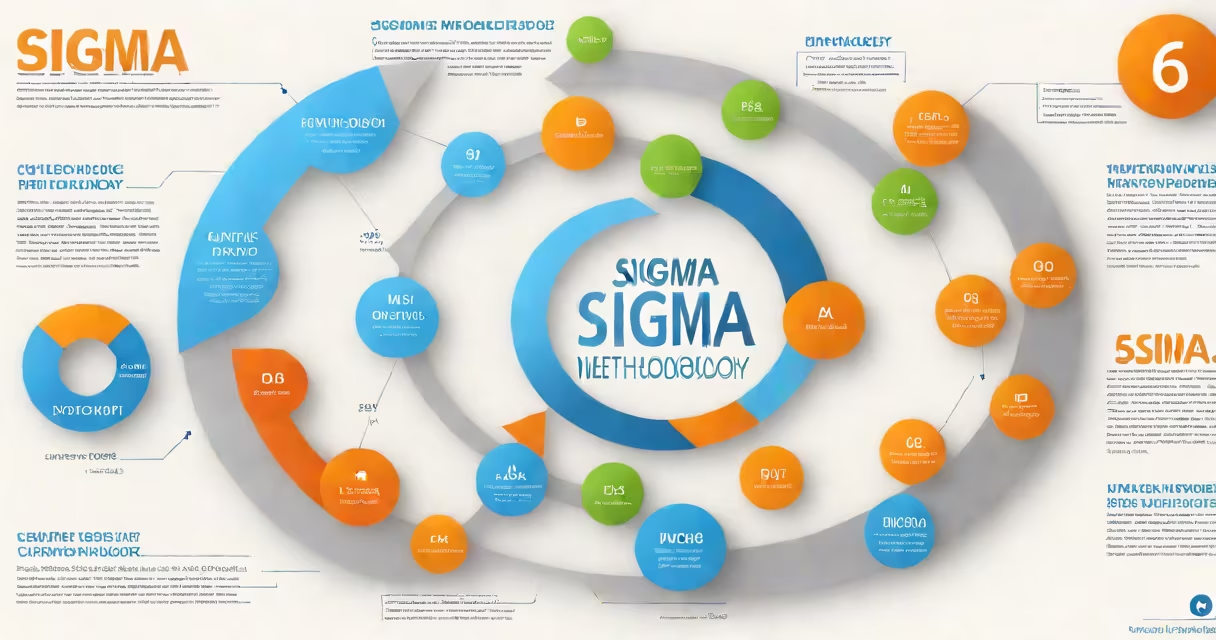
Six Sigma methodology is a data-driven approach to process improvement that aims to eliminate defects and reduce variability. It uses statistical analysis and problem-solving techniques to improve business processes.
Six Sigma follows a structured five-step approach called DMAIC:
This method helps improvements are based on data rather than assumptions.
Six Sigma projects are typically led by certified professionals who have undergone specialized training. The main roles include:
| Role | Description |
|---|---|
| White Belt | Basic understanding of Six Sigma concepts. |
| Yellow Belt | Supports projects and understands fundamental principles. |
| Green Belt | Leads small-scale projects and supports Black Belts. |
| Black Belt | Leads complex projects and mentors Green Belts. |
| Master Black Belt | Provides strategic guidance and trains other Belts. |
These roles ensure that Six Sigma projects are executed effectively at all levels of an organization.
Six Sigma is widely used in manufacturing, healthcare, finance, and service industries. Companies implement Six Sigma to reduce costs, improve quality, and improve customer satisfaction. For example, General Electric (GE) famously adopted Six Sigma in the 1990s, saving the company billions of dollars.
One common misconception is that Six Sigma is only applicable to large corporations. However, smaller businesses can also benefit from its principles to simplify operations and improve efficiency.
Many people confuse Six Sigma with Lean methodology. While both aim to improve processes, Six Sigma focuses on reducing variability and defects through statistical analysis, whereas Lean emphasizes eliminating waste and increasing efficiency. Some organizations combine both methodologies, known as Lean Six Sigma, to achieve better results.
Another misconception is that Six Sigma is only for quality control in manufacturing. In reality, it can be applied to any process where consistency and quality are critical, such as software development, healthcare, and customer service.
Consider a manufacturing company experiencing high defect rates in its production line. Using Six Sigma, the company would follow these steps:
By following the DMAIC cycle, the company successfully reduces defects and improves product quality.
During my time working at a manufacturing plant, I witnessed the implementation of Six Sigma firsthand. The plant faced issues with inconsistent product sizes. By applying the DMAIC method, we identified that the machinery calibration was the root cause. After adjusting the calibration settings and implementing regular maintenance checks, we reduced size inconsistencies by 70%. This experience highlighted the power of Six Sigma in driving measurable improvements.
Six Sigma methodology is a useful tool for process improvement, helping organizations reduce defects and improve efficiency. By following the DMAIC cycle and using data-driven decision-making, companies can achieve significant cost savings and quality improvements. Whether in manufacturing, healthcare, or service industries, Six Sigma provides a structured approach to solving complex problems and achieving sustainable results.