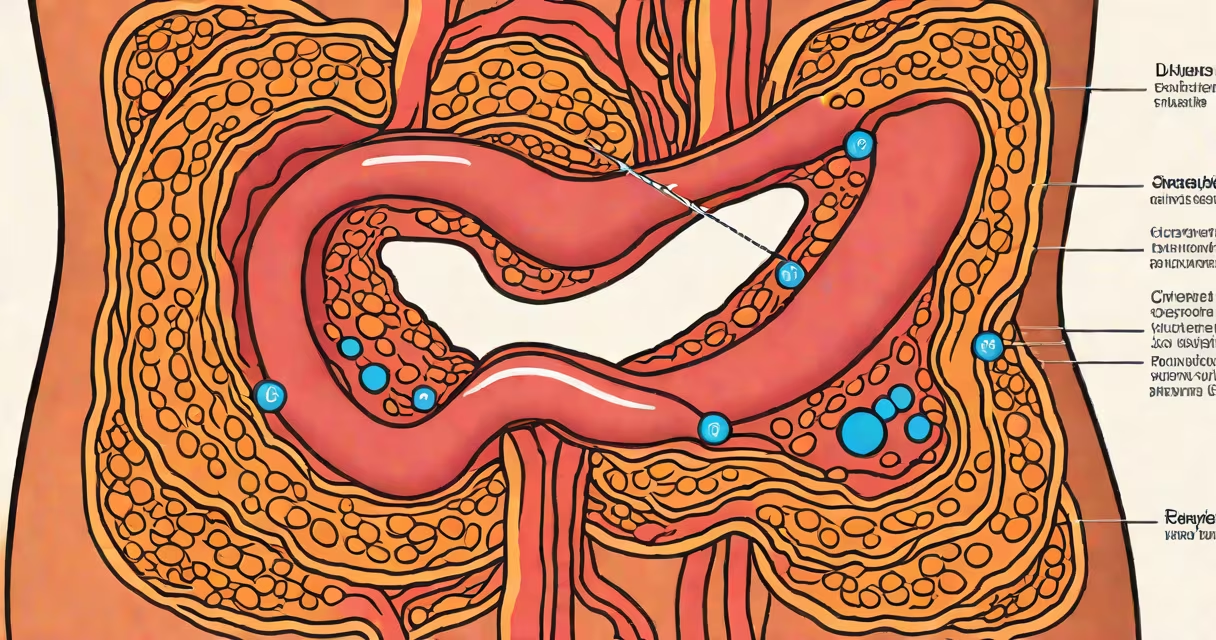
A perforated duodenal ulcer occurs when an ulcer in the duodenum (the first part of the small intestine) burrows completely through the intestinal wall, creating a hole. This allows digestive contents to leak into the abdominal cavity, triggering severe pain and infection.
The duodenum is normally protected against acid, but ulcers form when acidic digestive juices erode the lining. A perforated ulcer happens when this erosion goes all the way through the wall. The perforation creates an opening that spills digestive contents into the sterile abdominal cavity, causing inflammation and infection.
Perforated duodenal ulcers are most often caused by:
Less common causes include excessive alcohol use and rare genetic conditions like Zollinger-Ellison syndrome.
The sign symptom is sudden, severe pain in the upper abdomen, often described as a "boring" sensation that worsens with movement. Other signs include:
Diagnosis typically involves imaging tests like CT scans or X-rays to confirm the perforation. Blood tests may also show signs of infection.
Perforated duodenal ulcers require emergency surgery to repair the hole. Common procedures include:
After surgery, patients receive antibiotics and acid-reducing medications to prevent recurrence. Recovery typically takes several weeks.
Unlike other ulcer complications, a perforation always requires immediate surgical intervention. Without treatment, the condition can lead to sepsis or death within days. The prognosis is good if treated promptly, with most patients recovering fully.