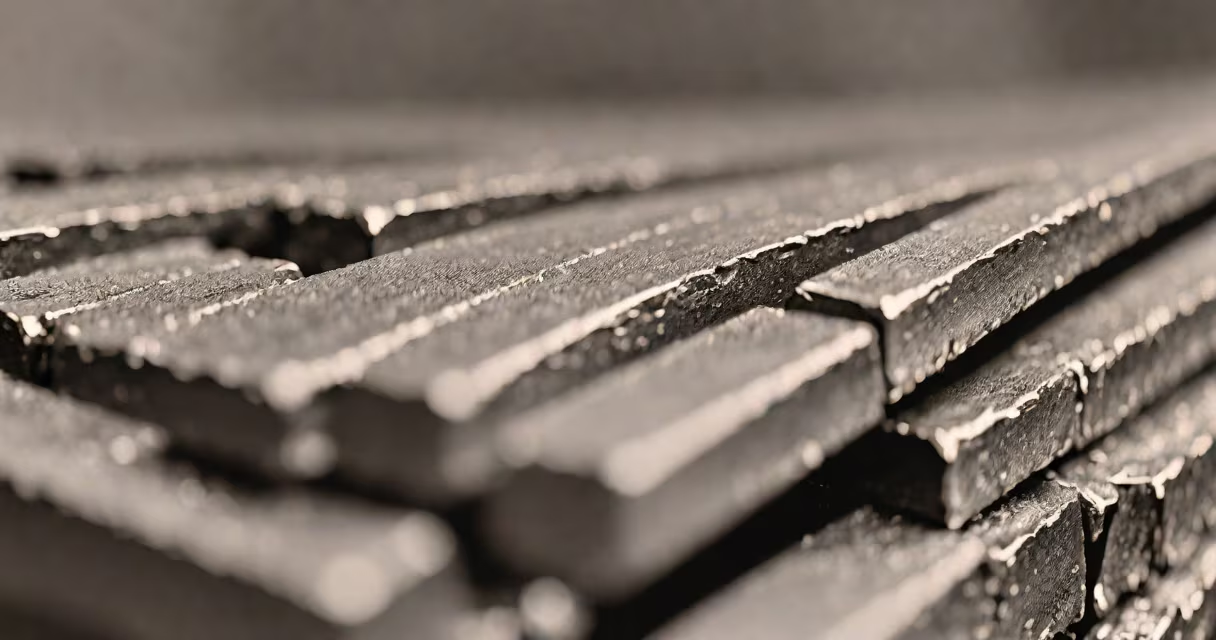
Annealed steel is steel that has been heated and then slowly cooled to make it softer and more workable. This process reduces hardness and internal stresses, improving machinability and ductility.
The annealing process involves three key steps: heating, soaking, and cooling. The steel is first heated to a specific temperature (usually between 1,100°F and 1,600°F, depending on the alloy) until it reaches a uniform temperature throughout. It is then held at this temperature for a set time to allow the material to relieve internal stresses. Finally, the steel is cooled slowly in air, a furnace, or another controlled environment.
There are several types of annealing, each suited to different materials and purposes:
| Type | Temperature Range | Primary Use |
|---|---|---|
| Full Annealing | 1,500-1,600°F | Softening steel for machining or forming |
| Process Annealing | 1,100-1,300°F | Relieving stress in cold-worked steel |
| Isothermal Annealing | 900-1,100°F | Improving toughness in high-carbon steels |
Annealed steel is commonly used in applications requiring precise shaping, such as stamping, bending, or drilling. For example, automotive manufacturers use annealed steel for car body parts because it can be easily formed into complex shapes without cracking. The process also enhances the steel's ability to withstand further processing, such as welding or painting.
One common misconception is that annealing makes steel weaker. While it does reduce hardness, it actually improves ductility and toughness, making the material more resistant to fracture under stress. According to the ASM Handbook, annealing is often used to prepare steel for subsequent hardening treatments, ensuring better control over the final properties.
In spring manufacturing, steel must be both strong and flexible. Springs are often made from medium-carbon steel that has been annealed to improve its formability. After shaping, the springs are typically hardened through quenching and tempering to achieve the desired strength. Without annealing, the steel would be too brittle to form into the required shapes without breaking.
I once observed this process firsthand at a local machine shop. The workers heated the steel coils to a bright orange glow, then let them cool gradually in an insulated chamber. The difference in workability was striking-the annealed steel bent smoothly, while unannealed samples cracked under the same pressure.
Annealed steel is often confused with normalized steel, but the two processes serve different purposes. Normalizing involves heating steel above its critical temperature and then air-cooling it, which refines the grain structure and improves strength. Annealing, however, focuses on softening the material for easier machining. A study by Materials Science and Engineering notes that normalization is typically used for low-carbon steels, while annealing is more common for high-carbon and alloy steels.
Annealed steel is essential for industries requiring precise shaping and machining. By softening the material through controlled heating and cooling, manufacturers can produce durable, workable steel components for many applications.