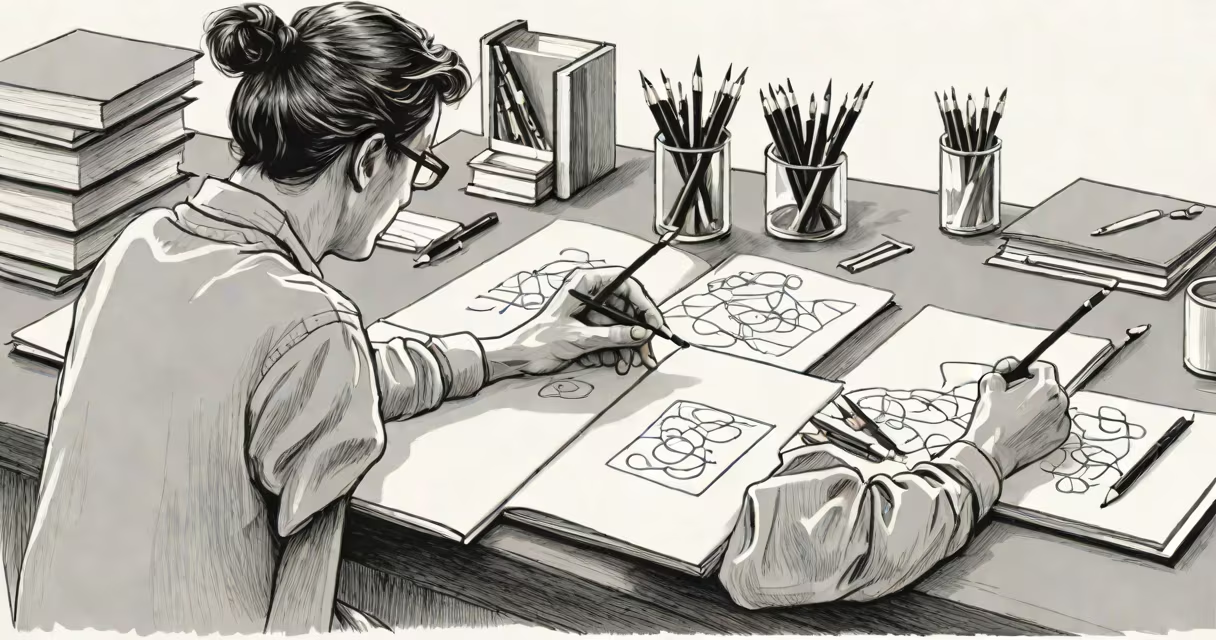
Arts and science refers to an educational approach that integrates humanities, social sciences, and natural sciences. This interdisciplinary model fosters critical thinking by connecting creative and analytical disciplines.
Programs in arts and science blend courses from traditional liberal arts fields like literature, philosophy, and history with STEM subjects such as biology, physics, and computer science. Students often design their own curriculum, choosing electives that align with their interests and career goals.
For example, a student might take a poetry workshop alongside a chemistry lab. This combination encourages them to analyze scientific concepts through a literary lens or explore narrative structures using data visualization techniques. The goal is to develop versatile skills that translate across industries.
Arts and science programs appear at various educational levels, from high school to graduate school. Here are the most common types:
Arts and science education is used in schools worldwide, particularly in institutions emphasizing interdisciplinary learning. According to the Association of American Colleges and Universities, 93% of employers say a demonstrated capacity to think critically, communicate, and solve complex problems is more important than a candidate's undergraduate major.
This approach prepares students for careers that don't fit neatly into one field. For instance, a data scientist might need to communicate findings to non-technical stakeholders, while a museum curator could benefit from understanding conservation chemistry. Arts and science programs equip graduates with the adaptability to thrive in evolving job markets.
Many people confuse arts and science with a general studies degree. While both are interdisciplinary, arts and science programs require deeper engagement with specific disciplines rather than surveying many topics superficially. Another misconception is that these programs lack focus, but most require a capstone project or thesis demonstrating mastery in a chosen area.
I once spoke with a liberal arts graduate who combined studio art with environmental science. Their senior project involved creating sculptures from recycled materials, which they presented alongside a research paper on sustainable design. This experience led to a career in urban planning, proving the program's practical value.
Consider a student interested in both psychology and computer science. In an arts and science program, they might take courses in cognitive psychology, machine learning, and even creative writing. For their final project, they could develop an app that uses behavioral insights to improve user productivity, combining their technical skills with an understanding of human motivation.
This kind of project showcases the power of interdisciplinary education. The student gains technical proficiency while learning to apply their knowledge in novel ways, a skill valued in fields like UX design, healthcare innovation, and policy analysis.