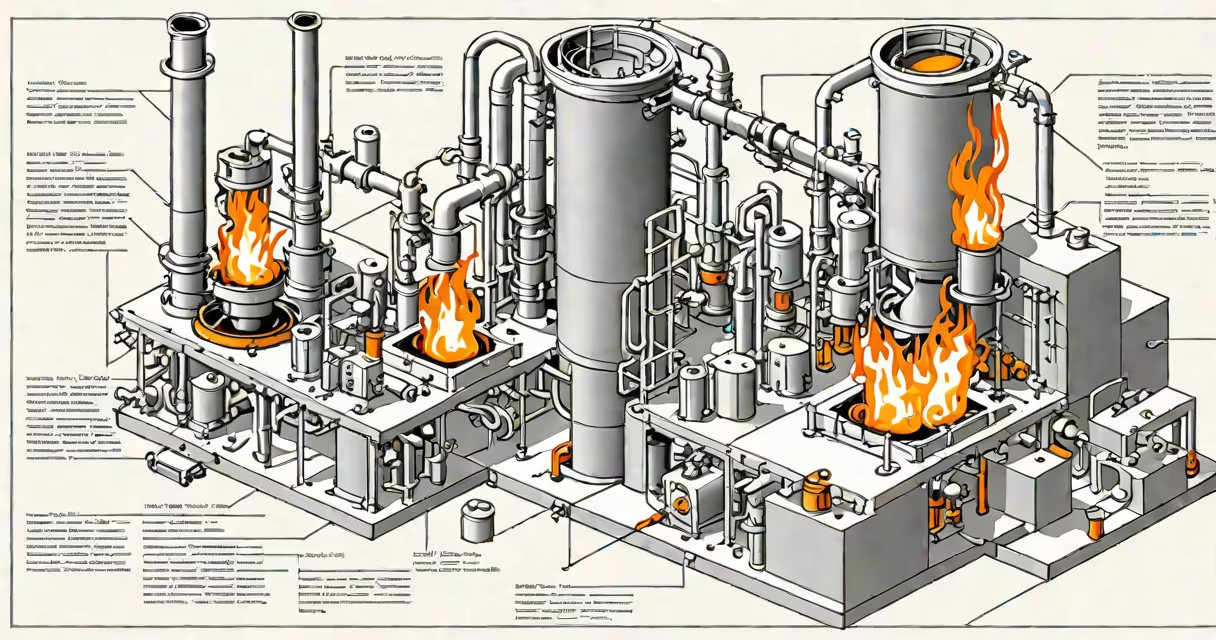
Combustion is a high-temperature exothermic chemical reaction between a fuel and an oxidant (usually oxygen) that produces heat and light, often visible as flame.
Combustion occurs when three conditions are met: fuel, oxygen, and heat. The heat provides activation energy to start the reaction, which then becomes self-sustaining as the reaction releases more heat. This process involves rapid oxidation of the fuel, breaking chemical bonds and forming new ones with oxygen molecules.
For example, when methane (CH₄) burns in oxygen (O₂), it produces carbon dioxide (CO₂) and water vapor (H₂O), along with heat and light:
CH₄ + 2O₂ → CO₂ + 2H₂O + heat + light
| Type | Description | Example |
|---|---|---|
| Complete Combustion | Fuel burns entirely with sufficient oxygen, producing carbon dioxide and water | Natural gas burning in a stove |
| Incomplete Combustion | Limited oxygen causes carbon monoxide and soot | Candle flame with yellow tip |
| Rapid Combustion | Fast reaction with explosion-like results | Fireworks |
| Spontaneous Combustion | Self-heating without external ignition | Rag soaked in oil catching fire |
Many people confuse combustion with decomposition, but they are distinct processes. Decomposition breaks down substances without oxygen, while combustion requires oxygen and releases energy rapidly. Another misconception is that all flames are the same temperature. Blue flames, indicating complete combustion, burn hotter than yellow or orange flames, which indicate incomplete combustion.
I once observed this firsthand while testing different fuels in a lab setting. The blue flame from burning propane reached temperatures around 1,980°C (3,596°F), whereas the yellow flame from a candle barely reached 1,000°C (1,832°F).
Combustion powers most internal combustion engines, such as those in cars and trucks. It also generates electricity in power plants, heats homes, and cooks food. However, it contributes to air pollution through emissions like carbon monoxide, nitrogen oxides, and particulate matter.
According to the U.S. Environmental Protection Agency, combustion-related activities account for about 85% of carbon monoxide emissions in the U.S. Understanding combustion chemistry helps develop cleaner technologies and reduce environmental impact.