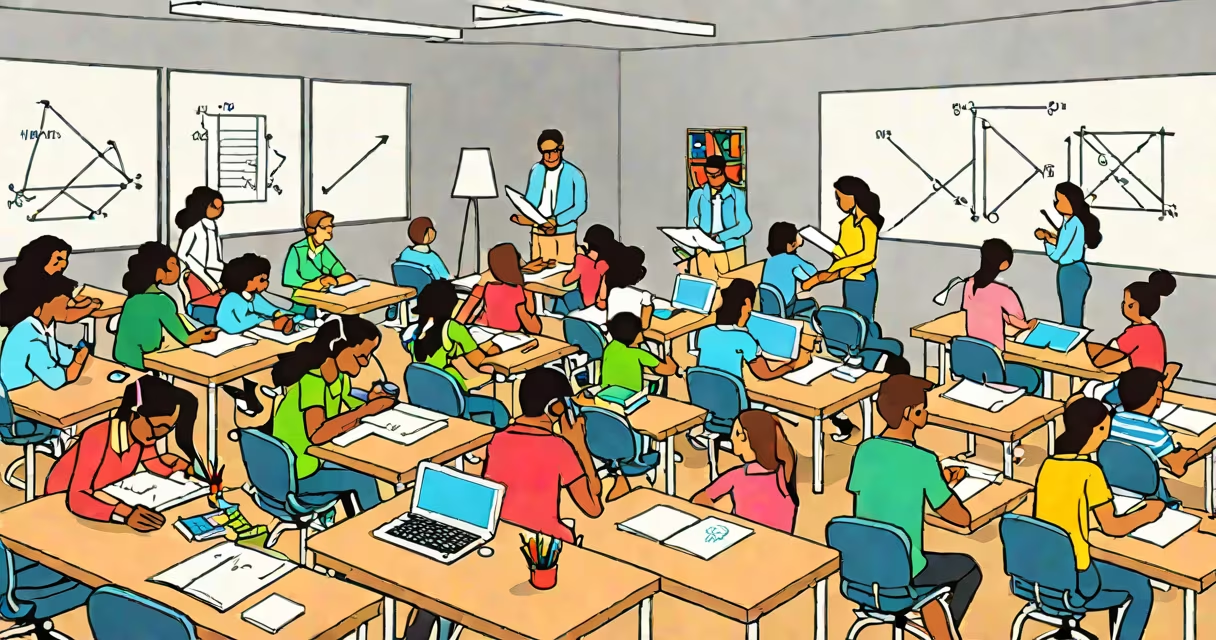
An inclusive classroom is a learning environment designed to accommodate all students, including those with disabilities, learning differences, or other special needs. It emphasizes equal access to education by adapting teaching methods, materials, and physical spaces.
Inclusion goes beyond physical presence-it's about meaningful participation. Teachers use differentiated instruction to tailor lessons for varied learning styles. For example, a math lesson might include visual aids for one student, hands-on activities for another, and verbal explanations for a third.
Assistive technologies play a key role. Tools like speech-to-text software, braille displays, or audiobooks help students with disabilities engage with the material. The classroom setup also matters: flexible seating, sensory-friendly lighting, and clear pathways support mobility and focus.
| Type | Key Features | Example |
|---|---|---|
| Co-Teaching | General and special educators teach together | A reading class where one teacher guides the lesson while another assists individual students |
| Universal Design for Learning (UDL) | Flexible curriculum and materials | Science lessons with videos, experiments, and written summaries to cater to different learners |
| Resource Rooms | Pull-out support for specific needs | Students leave the main classroom briefly for targeted help with reading or math |
Research shows inclusive classrooms benefit all students. A study by the National Center for Education Statistics found that inclusive settings improve social skills, academic performance, and self-esteem for students with disabilities. Peer interactions also help neurotypical students develop empathy and collaboration skills.
However, inclusion requires training and resources. Many schools struggle with funding and teacher preparation. The U.S. Department of Education reports that only 64% of teachers feel "very well prepared" to teach inclusive classes.
Some assume inclusion means lowering standards. In reality, it's about providing support to meet those standards. Others think it only applies to students with visible disabilities, but it also supports neurodivergent learners, English language learners, and those with chronic illnesses.
Another myth is that inclusion benefits only students with disabilities. Studies show it fosters creativity and problem-solving for all students by exposing them to diverse perspectives.
At Maplewood Elementary, third-grade teacher Ms. Carter starts the day with a morning meeting where each student shares how they're feeling. She uses visual schedules and timers to help students with ADHD stay on task. During a history lesson, she incorporates a video for auditory learners, a hands-on artifact for tactile learners, and a written summary for readers.
For students who need extra support, she pairs them with peers for collaborative work. Assistive technologies like text-to-speech software help students with dyslexia complete reading assignments independently. By the end of the day, every student has participated in a way that suits their learning style.