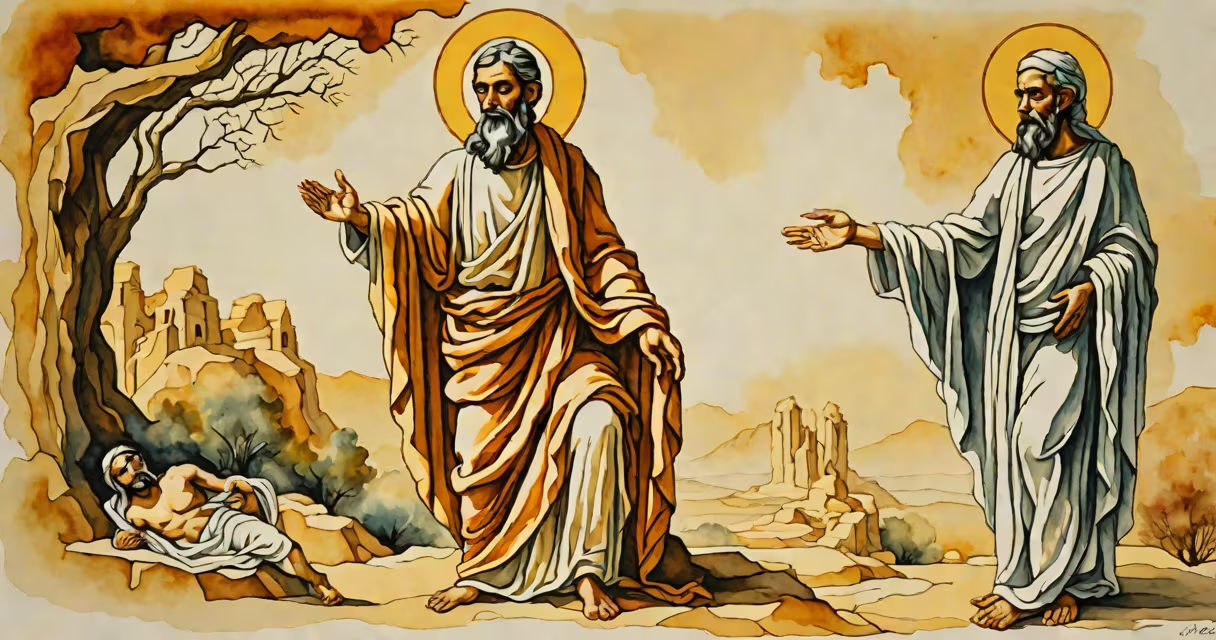
Incarnate means existing in bodily form, especially when referring to a deity or spirit taking on human flesh. The term originates from Latin incarnare, meaning "to make flesh."
The concept suggests a spiritual being becomes physically present in the material world. This transformation typically involves taking on human characteristics while retaining divine nature.
For example, Christianity teaches that Jesus Christ was the incarnation of God, becoming fully human while remaining fully divine. This dual nature allows the divine to interact with humanity in tangible ways.
Incarnation appears in various forms across religions and philosophies:
| Type | Description | Example |
|---|---|---|
| Theological | Divine beings taking human form | Jesus Christ in Christianity |
| Philosophical | Abstract concepts manifesting physically | Plato's forms becoming real objects |
| Literary | Characters embodying abstract ideas | Personification of Justice as a character |
Many confuse incarnate with simply being embodied or represented. While both involve taking physical form, incarnation specifically implies a transformation from a non-physical state to a physical one, often with divine connotations.
For instance, saying "love was incarnate in her actions" suggests love took on a tangible form through her behavior, which differs from merely describing her as loving.
Understanding incarnation helps interpret religious texts and philosophical writings. In the Bible, incarnation explains how God interacts with humanity. Philosophers use the concept to explore the relationship between abstract ideas and physical reality.
In literature, authors employ incarnation to create characters that represent complex themes or emotions. For example, a character might embody courage, making the abstract quality tangible for readers.
When studying religious art, I noticed how artists depict incarnation. Paintings of divine figures with human features visually represent the concept, making abstract theological ideas more accessible. This visual approach helps viewers grasp complex spiritual truths through familiar human forms.