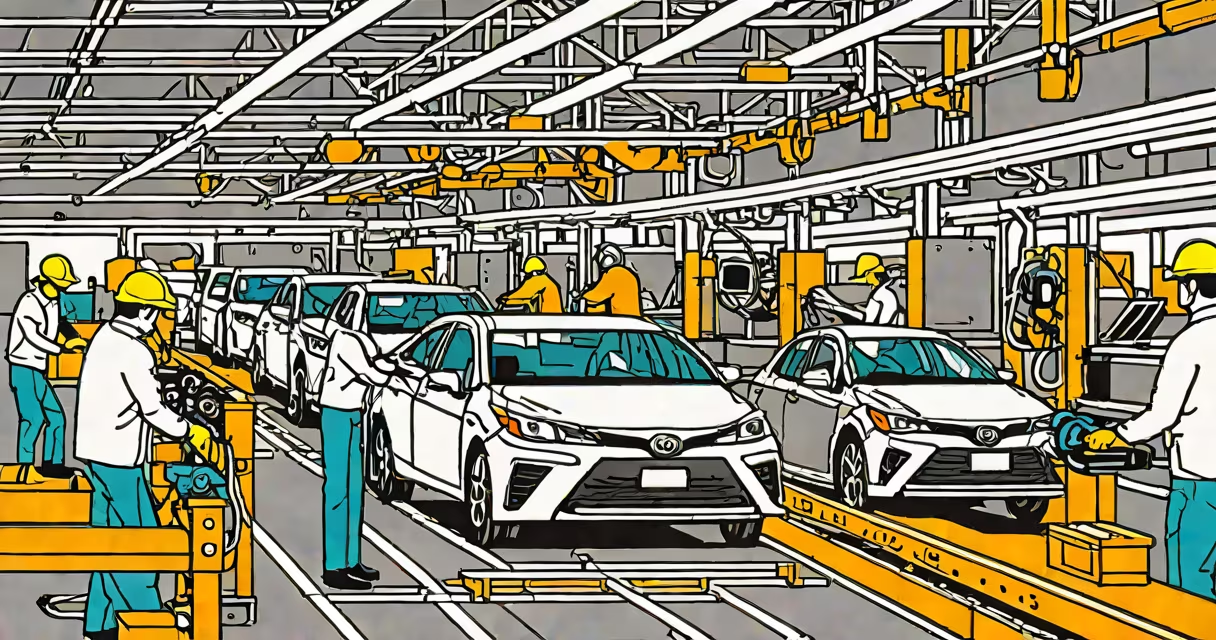
Just-in-time (JIT) manufacturing is a production strategy that aligns raw-material orders and finished goods with actual customer demand, minimizing inventory and waste. It operates on a pull system, where each step in the process pulls what it needs from the previous step.
Instead of producing goods in advance and storing them, JIT manufacturers wait until an order is placed before assembling products. This requires precise coordination between suppliers, production lines, and customers. For example, Toyota's JIT system ensures parts arrive exactly when needed for assembly, reducing storage costs and obsolescence.
JIT relies on several key elements:
JIT is widely adopted in automotive, electronics, and food industries. Toyota pioneered the approach in the 1970s to cut costs and improve efficiency. A study by the Harvard Business Review found JIT reduces inventory levels by up to 90%. However, it requires stable demand and reliable logistics.
Many confuse JIT with lean manufacturing, though they're distinct. Lean aims to eliminate waste broadly, while JIT focuses specifically on inventory reduction. Another myth is that JIT eliminates all stock-it actually maintains minimal safety buffers.
I once visited a JIT-run factory where shelves were nearly empty. The manager explained that parts arrived within hours of being ordered, keeping costs low without disrupting production.
| Aspect | JIT Manufacturing | Traditional Manufacturing |
|---|---|---|
| Inventory Levels | Minimal, just enough for immediate needs | High, often stored for months |
| Production Trigger | Customer demand | Forecasted demand |
| Lead Time | Short, often same-day delivery | Long, weeks or months |
JIT manufacturing optimizes production by matching output to demand, reducing waste and costs. While it requires precise coordination, its benefits make it a key part of modern efficient production.